
One of the most common questions patients ask after endoscopic spine surgery is:
“When can I return back to work?”
For many people, recovery is not just about pain relief. It is also about returning to normal life, supporting their family, and resuming their daily routine.
The good news is that most patients undergoing endoscopic spine surgery return to workplace much sooner than those who undergo traditional open spine surgery.
However, the answer depends on several factors, including the type of job you do, the procedure performed, your overall health, and how your body responds during recovery.
In this guide, we explain realistic return-to-work timelines, what to expect during recovery, and how to safely transition back into your professional life.
For a complete recovery timeline, see our Endoscopic Spine Surgery Recovery Time: Week-by-Week Recovery Guide.
Quick Answer: When Can Most Patients Return to Work?
Many patients can return to desk-based work within 1-2 weeks after endoscopic spine surgery.
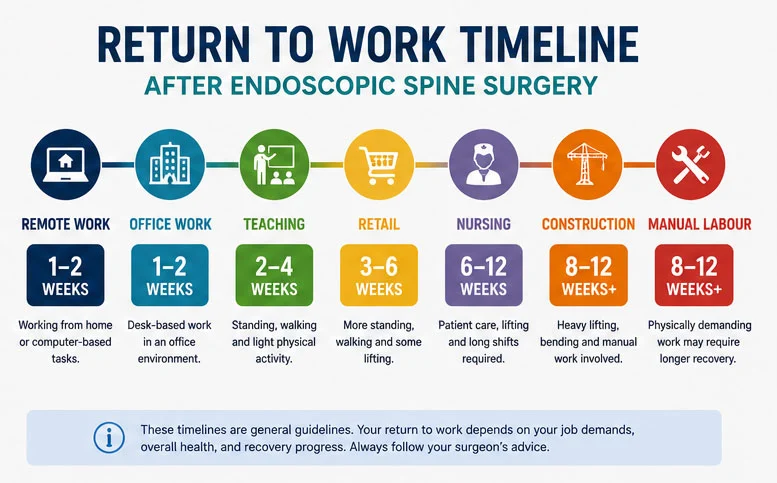
Jobs involving physical activity, lifting, bending, or prolonged standing typically require a longer recovery period.
| Job Type | Typical Return to Work Timeline |
|---|---|
| Remote computer work | 1-2 weeks |
| Office job | 1-2 weeks |
| Teaching | 2-4 weeks |
| Retail job | 3-6 weeks |
| Nursing | 6-12 weeks |
| Construction | 8-12 weeks |
| Heavy manual labour | 8-12 weeks or longer |
These timelines are general guidelines and may vary depending on individual circumstances.
Why Recovery Is Faster After Endoscopic Spine Surgery
One of the main advantages of endoscopic spine surgery is that it causes less disruption to surrounding muscles and tissues.
Compared with traditional open surgery, patients often experience:
- Smaller incisions
- Less post-operative pain
- Reduced blood loss
- Shorter hospital stays
- Earlier mobility
- Faster return to daily activities
This often allows patients to resume work sooner than expected.
Returning to a Desk Job
Patients who work at a computer generally return to work the fastest.
Many office workers can resume part-time or remote work within one to two weeks.
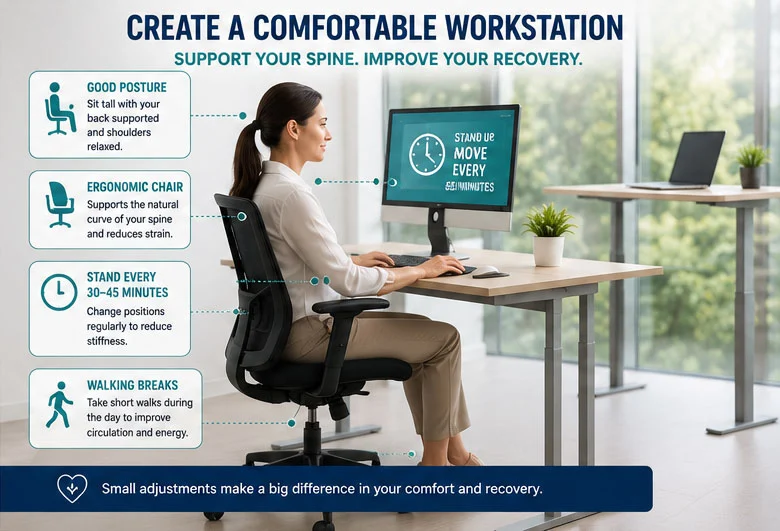
Challenges During the First Few Weeks
- Prolonged sitting
- Back stiffness
- Fatigue
- Reduced concentration due to medications
Tips for Office Workers
- Stand up every 30-45 minutes
- Use an ergonomic chair
- Alternate between sitting and standing
- Take short walking breaks
Even after returning to work, regular movement remains important.
Returning to Remote Work
Working from home often provides greater flexibility during recovery.
Many patients can:
- Do shorter hours initially
- Take frequent breaks
- Adjust their workstation
- Work in comfortable positions
Remote workers often return sooner than those who must commute daily.
Returning to Teaching and Professional Roles
Teachers, consultants, managers, and other professionals often return between two and four weeks after surgery.
Although these roles may not involve heavy lifting, they often require:
- Standing for long periods
- Walking frequently
- Travel between locations
- Long workdays
A phased return can help make the transition easier.
Returning to Retail and Customer-Facing Jobs
Retail jobs typically involves more physical demands than office work.
Common challenges include:
- Long periods of standing
- Walking throughout the day
- Occasional lifting
- Limited opportunities to rest
Many retail workers return within three to six weeks, depending on their recovery progress.
Returning to Nursing and Healthcare Roles
Nurses, healthcare assistants, and similar professionals often require a longer recovery period.
These roles frequently involve:
- Patient transfers
- Heavy lifting
- Long shifts
- Unexpected physical demands
Many healthcare workers return between six and twelve weeks after surgery.
Returning to Construction and Manual Labour
Construction workers, warehouse employees, mechanics, and labourers often face the greatest challenges when returning to work.
These jobs commonly involve:
- Heavy lifting
- Repeated bending
- Twisting movements
- Carrying loads
- Working in awkward positions
Returning too soon may increase the risk of reinjury.
Many manual workers require eight to twelve weeks or longer before returning to full duties.
Signs You May Be Ready to Return to Work
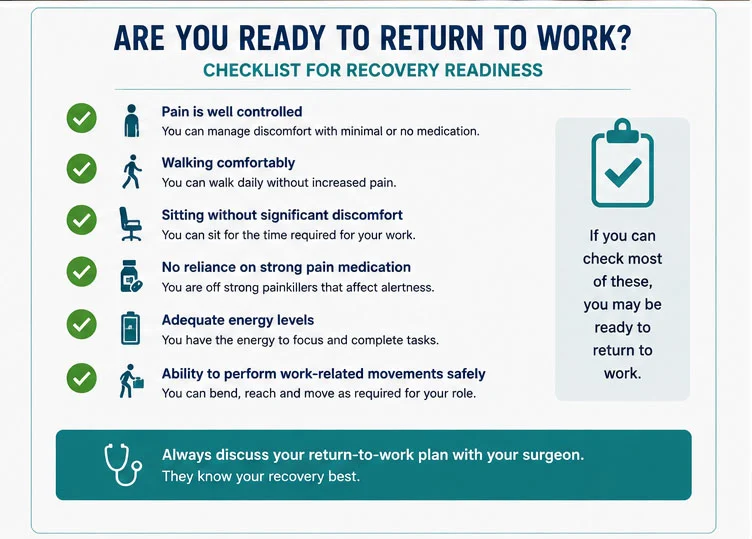
Every patient recovers differently, but common indicators include:
- Pain is well controlled
- Walking comfortably
- Sitting without significant discomfort
- No reliance on strong pain medication
- Adequate energy levels
- Ability to perform job related movements safely
Should You Return Full-Time or Gradually?
For many patients, a gradual return is the safest option.
A phased return may involve:
- Reduced working hours
- Remote work initially
- Modified duties
- Additional rest breaks
This approach allows the body to adapt while minimizing unnecessary strain.
Common Mistakes When Returning to Work
1. Returning Too Soon
Feeling better does not mean complete healing has occurred.
2. Sitting All Day
Regular movement remains important after returning to work.
3. Ignoring Fatigue
Recovery consumes energy and fatigue is common.
4. Lifting More Than Recommended
Always follow your surgeon’s lifting restrictions.
5. Skipping Follow-Up Appointments
Medical reviews help ensure recovery remains on track.
Frequently Asked Questions
Can I work from home after endoscopic spine surgery?
Many patients can perform remote work within one to two weeks.
When can I sit at a computer?
Most patients can sit for short periods within days of surgery, gradually increasing duration over time.
Can I drive to work?
You should only drive once you are comfortable, mobile, and no longer taking strong pain medication.
Read our guide on Driving After Spine Surgery.
What if my job involves lifting?
Physically demanding jobs usually require a longer recovery period and individualized guidance.
Can I return part-time first?
Yes. A phased return is often recommended and may improve comfort during recovery.
Final Thoughts
Most patients return to work significantly sooner after endoscopic spine surgery than they would after traditional open spine surgery. However, the exact timeline depends largely on the physical demands of your job.
Office workers often return within one to two weeks, while physically demanding occupations may require several months before full duties can safely resume.
The key is not simply returning to work as quickly as possible, but returning safely and sustainably. Following your surgeon’s advice and allowing adequate time for healing can help protect your long-term recovery and spinal health.
For a complete recovery roadmap, visit our Endoscopic Spine Surgery Recovery Time Guide.