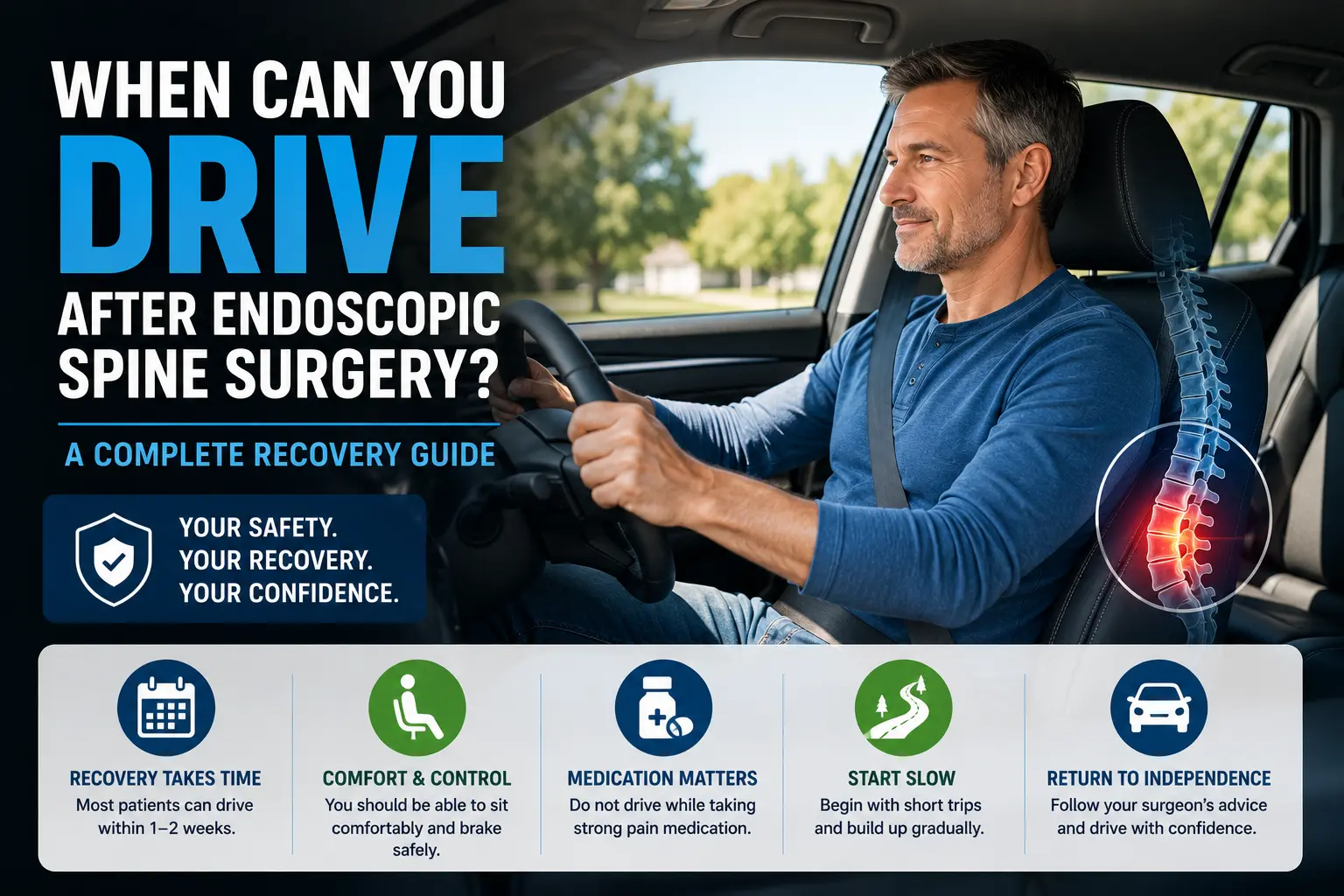
One of the most common questions patients ask after endoscopic spine surgery is:
“When can I start driving again?”
For many people, driving represents independence. Whether it is commuting to work, taking children to school, attending appointments, or simply running daily errands, being able to drive comfortably is an important milestone during recovery.
While most patients recover more quickly after endoscopic spine surgery than they would after traditional open surgery, returning to driving safely requires careful consideration.
Driving too soon may increase discomfort, slow recovery, or potentially put both you and other road users at risk.
This guide explains when most patients can safely drive after endoscopic spine surgery, factors that influence recovery, warning signs to watch for, and practical tips to help you return to the road confidently.
For a complete week-by-week recovery timeline, read our Endoscopic Spine Surgery Recovery Time Guide.
Quick Answer: When Can Most Patients Drive?
Many patients can safely return to driving within 1 to 2 weeks after endoscopic spine surgery.
However, there is no universal timeline that applies to everyone.
Before driving, you should be able to:
- Sit comfortably without significant pain
- Move your legs normally
- Perform an emergency stop safely
- Turn your body without severe discomfort
- React quickly in traffic
- Be free from the effects of strong pain medication
Your surgeon may provide specific recommendations based on your procedure and recovery progress.
Why Driving Too Soon Can Be Risky
Driving requires much more than simply sitting in a vehicle.
Safe driving depends on:
- Fast reaction times
- Good concentration
- Adequate strength
- Freedom of movement
- The ability to perform emergency maneuvers
After spine surgery, several factors can temporarily affect these abilities.
Reduced Reaction Time
Pain, stiffness, fatigue, and medication can all reduce reaction speed.
Difficulty Turning
Checking mirrors, blind spots, and surrounding traffic often requires twisting or rotating your body.
Emergency Braking
You must be able to apply the brake quickly and forcefully without hesitation.
If pain limits your movement, driving may not yet be safe.
Can I Drive Home After Surgery?
In almost all cases, patients should not drive themselves home after endoscopic spine surgery.
The effects of:
- Anaesthesia
- Sedation
- Pain medication
- Post-operative fatigue
can affect judgment and reaction times.
You should arrange for:
- A family member
- A friend
- A caregiver
- A transportation service
to take you home after the procedure.
Driving Recovery Timeline: Week by Week
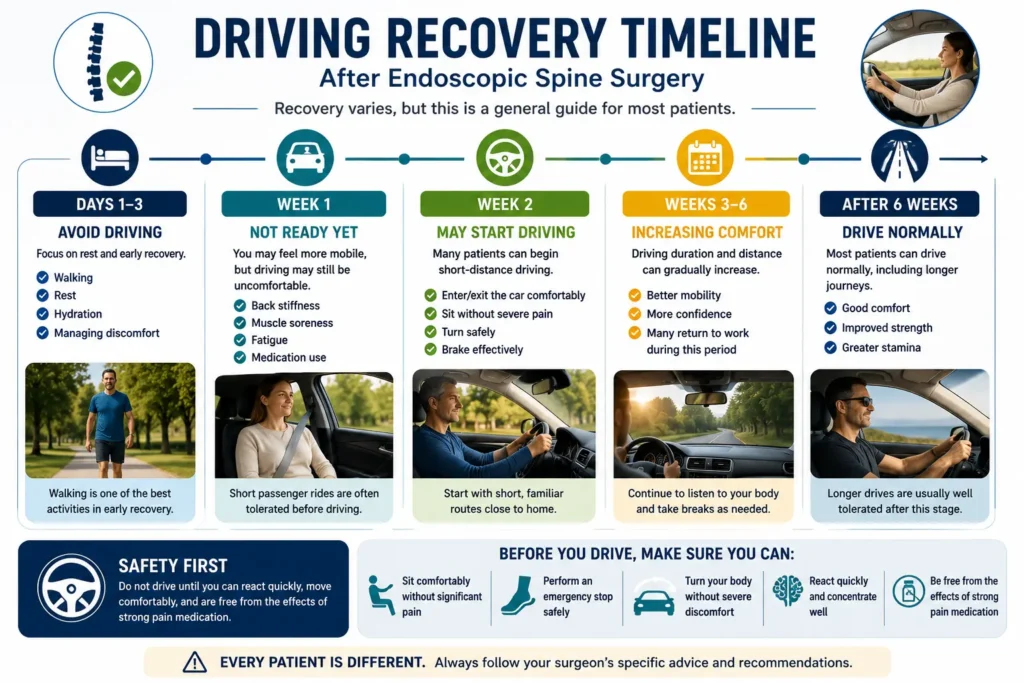
Days 1-3
Most patients should avoid driving completely.
Focus on:
- Walking
- Rest
- Hydration
- Managing discomfort
Walking remains one of the most beneficial activities during early recovery.
Learn more in our guide:
Walking After Endoscopic Spine Surgery
Week 1
Many patients begin feeling more mobile.
However, driving may still be uncomfortable due to:
- Back stiffness
- Muscle soreness
- Fatigue
- Medication use
Short car rides as a passenger are often tolerated before driving independently.
Week 2
Many patients can safely resume short-distance driving during this period.
Before driving, ensure you can:
- Enter and exit the vehicle comfortably
- Sit without severe pain
- Turn safely
- Brake effectively
Weeks 3-6
Most patients become increasingly comfortable behind the wheel.
Driving duration often increases gradually.
Many individuals also return to work during this period.
Read more in:
Return to Work After Endoscopic Spine Surgery
After 6 Weeks
Most patients can drive normally, including longer journeys, provided recovery has progressed well.
Can I Drive While Taking Pain Medication?
This is one of the most important questions during recovery.
You should not drive if medication affects:
- Alertness
- Concentration
- Reaction times
- Judgment
Strong opioid pain medications can impair driving ability and increase accident risk.
Always follow medical advice and medication guidelines before returning to the road.
How Long Can I Sit in a Car After Surgery?
Sitting places pressure on the lower back and can become uncomfortable during recovery.
Many patients find that:
- 10-20 minutes is comfortable initially
- Tolerance improves gradually
- Regular movement helps reduce stiffness
As recovery progresses, sitting becomes easier.
However, prolonged sitting should still be avoided during the early stages of healing.
Long-Distance Driving After Endoscopic Spine Surgery
Long journeys require additional planning.
Even if you feel well enough to drive, remaining seated for extended periods may cause:
- Stiffness
- Muscle fatigue
- Increased discomfort
- Reduced circulation
Tips for Long Drives
- Take breaks every 30-60 minutes
- Walk and stretch regularly
- Stay hydrated
- Adjust your seat for good posture
- Avoid driving when tired
How to Make Driving More Comfortable
Simple adjustments can make a significant difference.
Adjust Your Seat Properly
Your seat should support the natural curve of your spine.
Use Lumbar Support
A small lumbar cushion may improve comfort during longer journeys.
Keep Frequently Used Items Nearby
Avoid excessive twisting or reaching while driving.
Plan Shorter Trips Initially
Start with short journeys before attempting longer drives.
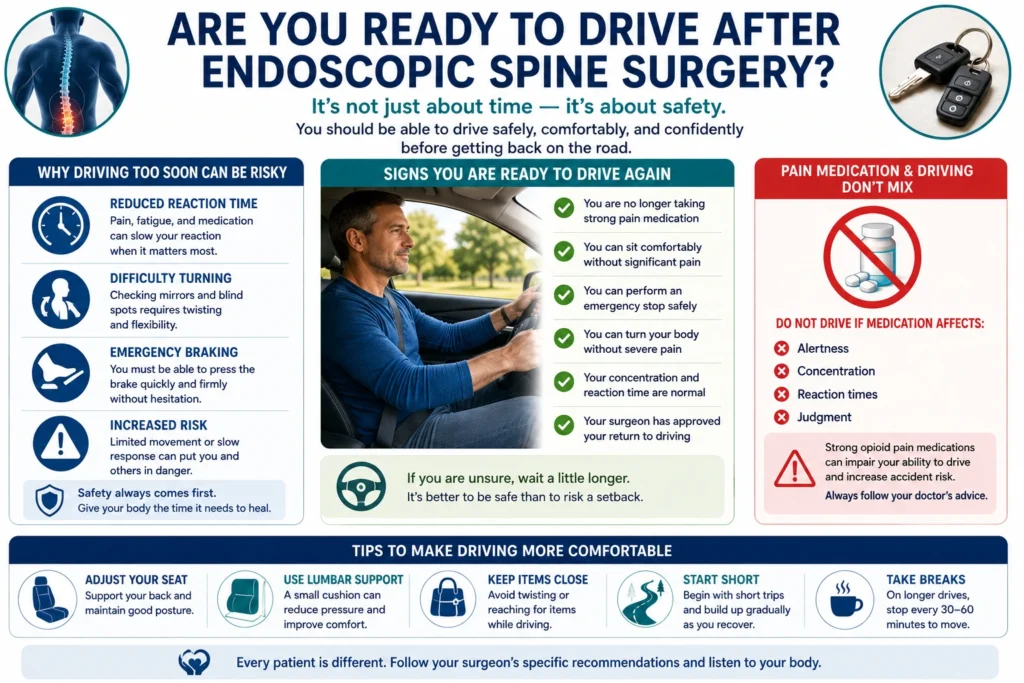
Signs You Are Ready to Drive Again
You may be ready to resume driving when:
- You are no longer taking strong pain medication
- You can sit comfortably
- You can perform an emergency stop safely
- You can turn your body without significant pain
- Your concentration has returned to normal
- Your surgeon has no concerns about your recovery
These factors are often more important than the number of days since surgery.
Common Driving Mistakes During Recovery
Driving Too Soon
Many patients feel better before they are fully ready to drive safely.
Attempting Long Journeys Immediately
Start with shorter drives and gradually build tolerance.
Ignoring Pain Signals
Pain often indicates that your body needs more recovery time.
Remaining Seated for Too Long
Take regular breaks and move frequently.
Driving While Fatigued
Fatigue is common after surgery and can affect concentration.
What If Driving Causes Pain?
Mild soreness during recovery can be normal.
However, driving should not cause:
- Severe pain
- Increasing weakness
- Significant numbness
- Progressively worsening symptoms
If symptoms worsen consistently after driving, discuss this with your surgeon.
Frequently Asked Questions
Can I drive one week after endoscopic spine surgery?
Some patients may be able to, but many require slightly longer. Recovery varies between individuals.
Can I be a passenger before I can drive?
Yes. Many patients tolerate short passenger journeys before driving independently.
Can I drive if I still have numbness?
It depends on the severity and whether it affects your ability to control the vehicle safely.
Read more in:
Why Is My Leg Still Numb After Endoscopic Spine Surgery?
When can I drive long distances?
Most patients should wait until they can comfortably tolerate sitting and driving without significant symptoms.
Can I drive an automatic car sooner than a manual car?
Some patients find automatic vehicles easier during recovery because they require less lower limb movement.
Final Thoughts
Returning to driving after endoscopic spine surgery is an important milestone in recovery.
Most patients can safely resume driving within one to two weeks, although the exact timeline varies depending on the individual and the procedure performed.
The most important consideration is not how many days have passed since surgery, but whether you can drive safely, comfortably, and confidently.
Start with short journeys, avoid rushing the process, and always follow your surgeon’s recommendations.
For a complete week-by-week recovery roadmap, visit our Endoscopic Spine Surgery Recovery Time Guide.