Spinal tumors
Spinal tumours are abnormal growths that develop within or around the spine, spinal cord, nerves, or surrounding tissues. These tumours may be benign or malignant and can affect the vertebrae, spinal canal, nerve roots, or spinal cord itself.
Spinal tumours can cause pain, nerve compression, spinal instability, and neurological symptoms depending on their size, location, and rate of growth. Early diagnosis and specialist treatment are essential to protect neurological function and prevent progression of symptoms.
Symptoms may include persistent back or neck pain, weakness, numbness, balance difficulties, walking problems, and in severe cases, loss of bowel or bladder control.
At Spine Focus UK, Mr. Taofiq Desmond Sanusi provides specialist assessment and advanced treatment for complex spinal tumours using modern imaging, evidence-based neurosurgical techniques, and personalised treatment planning.
Comprehensive evaluation is essential to determine the type of tumour, its relationship to neurological structures, spinal stability, and the safest treatment strategy for each individual patient.
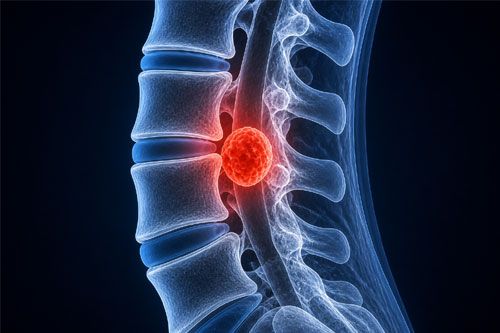
Understanding Spinal Tumours
Spinal tumours are abnormal masses of tissue that develop within or around the spinal column and spinal cord. These tumours may originate in the spine itself or spread from cancers elsewhere in the body.
The spine contains critical neurological structures including the spinal cord, spinal nerves, vertebrae, ligaments, and surrounding soft tissues. As spinal tumours grow, they may place pressure on these structures, leading to pain, neurological symptoms, spinal instability, and reduced mobility.
Spinal tumours vary greatly in behaviour. Some are slow-growing and benign, while others may be aggressive or malignant. Early specialist assessment is important to accurately diagnose the tumour and determine the most appropriate treatment approach.
At Spine Focus UK, specialist care focuses on achieving accurate diagnosis, protecting neurological function, relieving symptoms, preserving spinal stability, and improving long-term patient outcomes.
Types of Spinal Tumours
Primary Spinal Tumours
Primary spinal tumours originate within the spine or spinal cord itself. These tumours may develop from bone, nerve tissue, meninges, or other spinal structures.
Examples include:
- Meningiomas
- Schwannomas
- Ependymomas
- Astrocytomas
- Chordomas
- Osteoblastomas
Many primary spinal tumours are benign but may still require treatment due to compression of neurological structures.
Metastatic Spinal Tumours
Metastatic spinal tumours occur when cancer spreads to the spine from another part of the body.
Common primary cancers that may spread to the spine include:
- Breast cancer
- Lung cancer
- Prostate cancer
- Kidney cancer
- Thyroid cancer
Metastatic disease may weaken the spine, cause spinal instability, and compress the spinal cord or nerves.
Intradural and Extradural Tumours
Spinal tumours are also classified according to their location relative to the dura, the protective covering surrounding the spinal cord.
Tumours may be:
- Intradural extramedullary
- Intramedullary
- Extradural
The location of the tumour significantly influences symptoms, treatment planning, and surgical approach.
Common Symptoms of Spinal Tumours
Symptoms vary depending on the tumour’s location, size, and effect on surrounding neurological structures.
Common symptoms include:
- Persistent back or neck pain
- Pain that worsens at night
- Numbness or tingling
- Weakness in the arms or legs
- Balance problems
- Walking difficulties
- Loss of coordination
- Reduced mobility
- Spinal deformity
- Bowel or bladder dysfunction in severe cases
Neurological symptoms may gradually worsen as the tumour grows or compresses the spinal cord and nerves.
How Spinal Tumours Are Diagnosed
Accurate diagnosis requires detailed neurological evaluation and advanced imaging studies.
Investigations may include:
- MRI scans
- CT imaging
- Spinal X-rays
- Contrast imaging studies
- Neurological examination
- Biopsy in selected cases
- Whole-body imaging when metastatic disease is suspected
MRI scanning is particularly important for evaluating spinal cord involvement, tumour location, and compression of surrounding neurological structures.
Treatment Options for Spinal Tumours
Treatment depends on the type of tumour, location, neurological involvement, spinal stability, and the patient’s overall health.
Monitoring and Observation
Some slow-growing benign tumours may initially be monitored with regular imaging and clinical follow-up if symptoms are minimal.
Surgical Treatment
Surgery may be recommended to:
- Relieve spinal cord or nerve compression
- Remove or reduce tumour size
- Restore spinal stability
- Prevent neurological deterioration
- Obtain tissue diagnosis
Modern microsurgical techniques allow precise treatment of spinal tumours while minimising risk to surrounding neurological structures.
Minimally Invasive and Advanced Surgical Techniques
Selected spinal tumours may be treated using minimally invasive spinal surgery or advanced image-guided techniques depending on tumour location and complexity.
Radiotherapy and Oncology Treatment
Some tumours may require radiotherapy, chemotherapy, or multidisciplinary oncology care as part of the treatment plan.
Management often involves collaboration between neurosurgeons, spinal surgeons, oncologists, radiologists, and rehabilitation specialists.
The Importance of Early Specialist Assessment
Early diagnosis and specialist management are essential for patients with spinal tumours.
Prompt treatment may help:
- Protect neurological function
- Prevent spinal cord damage
- Reduce pain
- Preserve mobility
- Maintain spinal stability
- Improve long-term outcomes
Persistent spinal pain, neurological symptoms, or progressive weakness should always be assessed by a specialist.
Recovery and Rehabilitation
Recovery depends on the type of tumour, degree of neurological involvement, and treatment performed.
Post-treatment rehabilitation may include:
- Physiotherapy
- Neurological rehabilitation
- Pain management
- Mobility training
- Long-term imaging follow-up
Comprehensive rehabilitation plays an important role in restoring function and supporting long-term recovery.
Advanced Spinal Tumour Care at Spine Focus UK
Spine Focus UK provides specialist diagnosis and advanced treatment for complex spinal tumours and spinal cord disorders.
Mr. Taofiq Desmond Sanusi is a Consultant Neurosurgeon and Complex Spine Surgeon with advanced fellowship training in complex spinal pathology, minimally invasive spinal surgery, spinal reconstruction, and neurological conditions affecting the spine.
Patients receive comprehensive, evidence-based care using advanced imaging, modern neurosurgical techniques, and personalised treatment planning focused on neurological protection, symptom relief, spinal stability, and long-term quality of life.
Frequently Asked Questions
Common questions about Spinal tumors, symptoms, diagnosis, treatment options, and recovery.
What are spinal tumours?
Spinal tumours are abnormal growths that develop within or around the spine, spinal cord, nerves, or surrounding tissues.
Are spinal tumours always cancerous?
No. Spinal tumours may be benign or malignant, although both types can cause neurological symptoms and spinal problems.
What symptoms can spinal tumours cause?
Symptoms may include persistent back or neck pain, weakness, numbness, balance problems, walking difficulties, and neurological symptoms.
How are spinal tumours diagnosed?
Diagnosis usually involves MRI scans, CT imaging, neurological examination, and in some cases biopsy or additional imaging studies.
Can spinal tumours compress the spinal cord?
Yes. Spinal tumours may compress the spinal cord or nerves and cause progressive neurological symptoms if untreated.
When is surgery needed for spinal tumours?
Surgery may be recommended to relieve neurological compression, remove the tumour, stabilise the spine, or obtain a tissue diagnosis.
Can minimally invasive surgery be used for spinal tumours?
Selected spinal tumours may be treated using minimally invasive or image-guided surgical techniques depending on the tumour location and complexity.
What is metastatic spinal disease?
Metastatic spinal disease occurs when cancer spreads to the spine from another part of the body.
Can spinal tumours affect walking and balance?
Yes. Compression of the spinal cord or nerves may cause weakness, balance problems, walking difficulties, and coordination issues.
Why is early specialist assessment important?
Early diagnosis and treatment may help protect neurological function, prevent spinal cord damage, preserve mobility, and improve long-term outcomes.
Need Specialist Advice?
Spine Focus UK provides specialist assessment and advanced treatment for complex spinal and neurosurgical conditions.
Book a Consultation