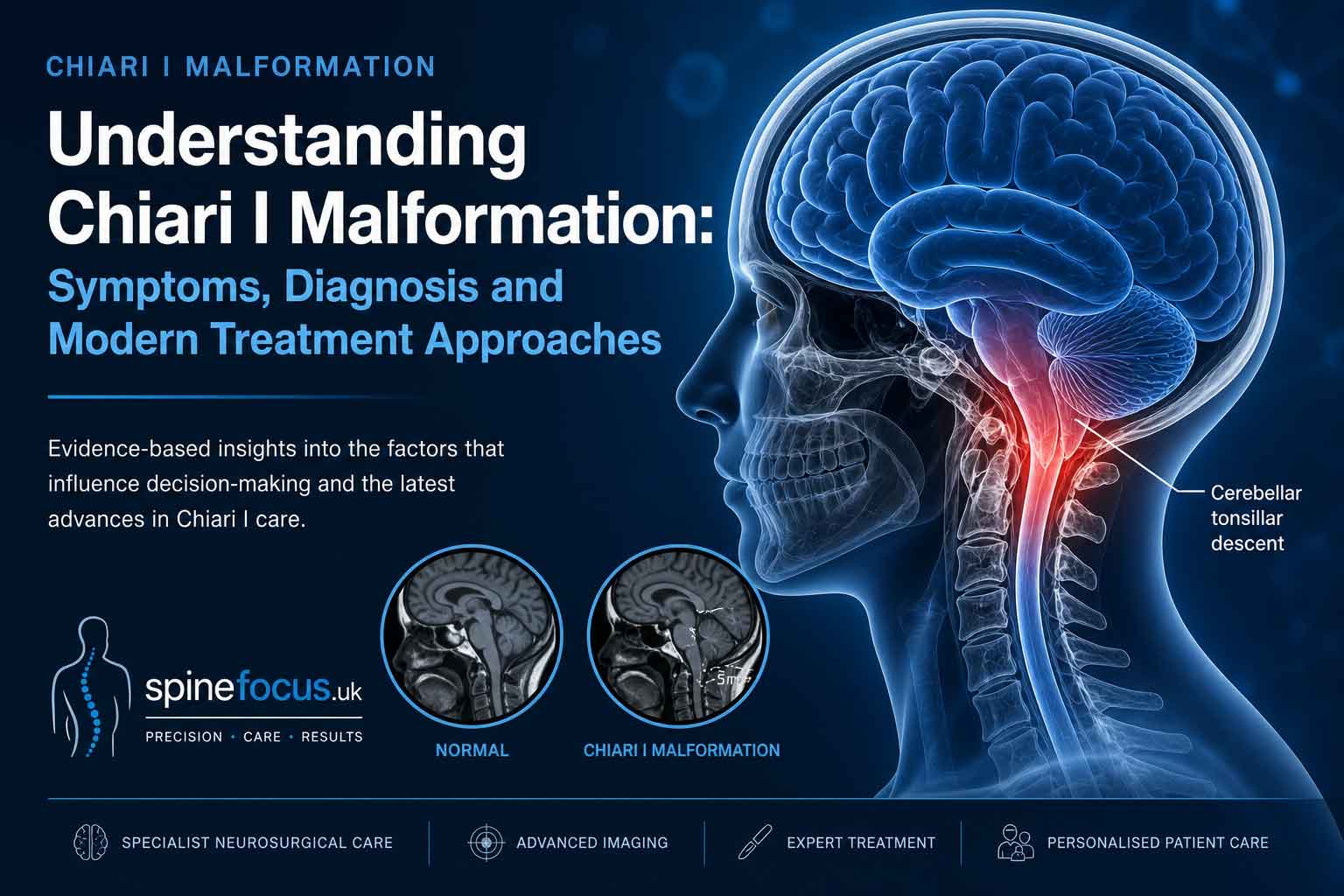
Chiari I Malformation is a neurological condition where part of the brain, known as the cerebellar tonsils, extends downward into the upper spinal canal. This can place pressure on the brainstem, affect cerebrospinal fluid (CSF) flow, and lead to a wide range of neurological symptoms.
Some people with Chiari I Malformation may never develop symptoms, while others experience headaches, neck pain, dizziness, balance problems, numbness, weakness, or difficulties with coordination that can significantly affect everyday life.
At Spinefocus UK London, Mr. Desmond Sanusi, Consultant Neurosurgeon and Complex Spine Surgeon, provides specialist assessment and advanced treatment for Chiari I Malformation and related craniovertebral conditions.
What Is Chiari I Malformation?
Chiari I Malformation is a structural abnormality involving the lower part of the brain and the upper spinal canal. It occurs when the cerebellar tonsils descend through the opening at the base of the skull known as the foramen magnum.
This downward displacement can interfere with the normal flow of cerebrospinal fluid around the brain and spinal cord, potentially leading to pressure-related neurological symptoms.
Chiari I Malformation may be:
- Present from birth (congenital)
- Associated with connective tissue disorders
- Related to craniovertebral abnormalities
- Linked to altered cerebrospinal fluid dynamics
Modern research now suggests that Chiari I Malformation is often more complex than previously believed and may involve multiple anatomical and neurological factors.
Common Symptoms of Chiari I Malformation
Symptoms can vary significantly between patients. Some individuals experience only mild symptoms, while others develop progressive neurological problems.
Common Chiari I Malformation symptoms include:
- Headaches at the back of the head
- Headaches worsened by coughing or straining
- Neck pain and stiffness
- Dizziness or vertigo
- Balance and coordination problems
- Numbness or tingling in the arms or legs
- Muscle weakness
- Difficulty swallowing
- Visual disturbances
- Fatigue and poor concentration
- Sleep problems
- Fine motor coordination difficulties
Symptoms may gradually worsen over time, particularly if pressure on the brainstem or spinal cord increases.
What Is Syringomyelia?
Some patients with Chiari I Malformation also develop a condition called syringomyelia. This occurs when a fluid-filled cavity, known as a syrinx, forms within the spinal cord.
Syringomyelia can cause:
- Progressive weakness
- Nerve pain
- Loss of sensation
- Stiffness
- Muscle wasting
- Difficulty with coordination
If left untreated, syringomyelia may lead to permanent neurological damage, which is why early specialist assessment is important.
How Is Chiari I Malformation Diagnosed?
MRI scanning is the gold standard investigation used to diagnose Chiari I Malformation.
Imaging helps specialists evaluate:
- Degree of cerebellar tonsil descent
- Compression around the foramen magnum
- Cerebrospinal fluid flow
- Presence of syringomyelia
- Brainstem or spinal cord compression
- Craniovertebral abnormalities
Advanced imaging techniques such as cine MRI may also be used to assess cerebrospinal fluid flow dynamics around the brain and spinal cord.
Importantly, MRI findings alone do not always determine whether treatment or surgery is necessary. Some patients with significant imaging changes may have minimal symptoms, while others with smaller abnormalities experience severe symptoms.
When Is Surgery Recommended for Chiari I Malformation?
Treatment decisions are highly individualised and depend on symptoms, neurological findings, and imaging results.
Conservative management may be appropriate for patients with mild or stable symptoms. This can include:
- Regular monitoring
- Pain management
- Physiotherapy
- Follow-up MRI imaging
- Lifestyle adjustments
Surgery may be recommended if patients experience:
- Progressive neurological symptoms
- Severe Chiari-related headaches
- Syringomyelia
- Spinal cord compression
- Balance or coordination difficulties
- Cerebrospinal fluid flow obstruction
- Worsening weakness or numbness
The most common procedure is foramen magnum decompression surgery, which aims to create more space around the brainstem and restore normal cerebrospinal fluid flow.
Modern Research Improving Chiari Treatment Decisions
Recent neurosurgical research has improved how specialists assess Chiari I Malformation and identify patients who may benefit most from surgery.
Studies have shown that several factors are strongly associated with the need for surgical treatment, including:
- Classic Chiari symptoms
- Tonsillar descent greater than 10 mm
- Presence of syringomyelia
- Progressive neurological symptoms
Modern classification systems now combine clinical symptoms and MRI findings to support more accurate and personalised treatment planning.
At Spinefocus London, treatment decisions are always based on a comprehensive evaluation of both imaging findings and the patient’s symptoms and quality of life.
Advanced Chiari I Malformation Treatment at Spinefocus UK
At Spinefocus UK, patients benefit from specialist expertise in complex neurosurgical and spinal conditions.
Mr. Sanusi provides advanced assessment and management for Chiari I Malformation using evidence-based and patient-centred approaches.
Treatment may involve:
- Advanced microsurgical techniques
- Detailed MRI and CSF flow analysis
- Minimally invasive approaches where appropriate
- Multidisciplinary care planning
- Long-term monitoring and rehabilitation support
Every patient receives an individualised assessment tailored to their symptoms, imaging findings, and long-term goals.
When Should You See a Specialist?
You should seek specialist assessment if you experience:
- Persistent headaches at the back of the head
- Headaches worsened by coughing or sneezing
- Balance or coordination problems
- Numbness or weakness in the limbs
- Difficulty swallowing
- Progressive neurological symptoms
- Symptoms affecting daily life or mobility
Early diagnosis and specialist care may help prevent symptom progression and improve quality of life.
Expert Chiari I Malformation Care in London
Mr. Desmond is a Consultant Neurosurgeon and Complex Spine Surgeon with specialist fellowship training in advanced spinal and craniovertebral surgery.
At Spinefocus London, patients receive comprehensive assessment and personalised treatment for Chiari I Malformation, syringomyelia, and related neurological conditions.
The focus is always on providing safe, evidence-based care designed to improve long-term neurological function, comfort, and quality of life.
Research Reference
Frequently Asked Questions
What is Chiari I Malformation?
Chiari I Malformation is a neurological condition where part of the brain, called the cerebellar tonsils, extends downward into the spinal canal. This can disrupt cerebrospinal fluid flow and place pressure on the brainstem and spinal cord.
What are the common symptoms of Chiari I Malformation?
Common symptoms include headaches at the back of the head, neck pain, dizziness, balance problems, numbness, weakness, difficulty swallowing, and coordination issues. Symptoms may worsen when coughing, sneezing, or straining.
Can Chiari I Malformation cause headaches?
Yes. Chiari headaches are one of the most common symptoms. They are often felt at the back of the head and may worsen during coughing, sneezing, bending, or physical strain.
How is Chiari I Malformation diagnosed?
Chiari I Malformation is usually diagnosed using MRI scanning, which allows specialists to assess cerebellar tonsil descent, cerebrospinal fluid flow, spinal cord compression, and associated conditions such as syringomyelia.
What is syringomyelia?
Syringomyelia is a condition where a fluid-filled cavity, known as a syrinx, develops inside the spinal cord. It is sometimes associated with Chiari I Malformation and may cause weakness, pain, numbness, or neurological symptoms.
Does Chiari I Malformation always require surgery?
No. Some patients with mild or stable symptoms may only require monitoring and conservative management. Surgery is usually considered when symptoms become progressive, severe, or associated with spinal cord compression or syringomyelia.
What surgery is performed for Chiari I Malformation?
The most common procedure is foramen magnum decompression surgery. The aim is to create more space around the brainstem and restore normal cerebrospinal fluid flow.
When should I see a specialist for Chiari symptoms?
You should seek specialist assessment if you experience persistent headaches, balance problems, weakness, numbness, swallowing difficulties, or worsening neurological symptoms affecting daily life.
Who is Mr. Desmond Sanusi?
Mr. Desmond Sanusi is a Consultant Neurosurgeon and Complex Spine Surgeon with specialist fellowship training in advanced spinal and craniovertebral surgery.
Does Spinefocus London treat Chiari I Malformation?
Yes. Spinefocus UK London provides specialist assessment and treatment for Chiari I Malformation, syringomyelia, and related craniovertebral conditions.