If you are considering endoscopic spine surgery or have recently undergone the procedure, one of the first questions on your mind is likely:
“How long will recovery take?”
The good news is that endoscopic spine surgery is designed to minimize tissue damage, reduce post-operative pain, and help patients return to normal activities faster than traditional open spine surgery. Many patients are walking within hours of their procedure and returning to desk-based work within one to two weeks.
However, recovery is not the same for everyone. Factors such as age, overall health, physical fitness, the condition being treated, and the severity of nerve compression can all influence healing time.
This comprehensive guide explains exactly what to expect after endoscopic spine surgery, including recovery milestones, activity restrictions, and practical tips to help you heal safely.
Table of Contents
- Quick Answer: How Long Does Recovery Take?
- What Is Endoscopic Spine Surgery?
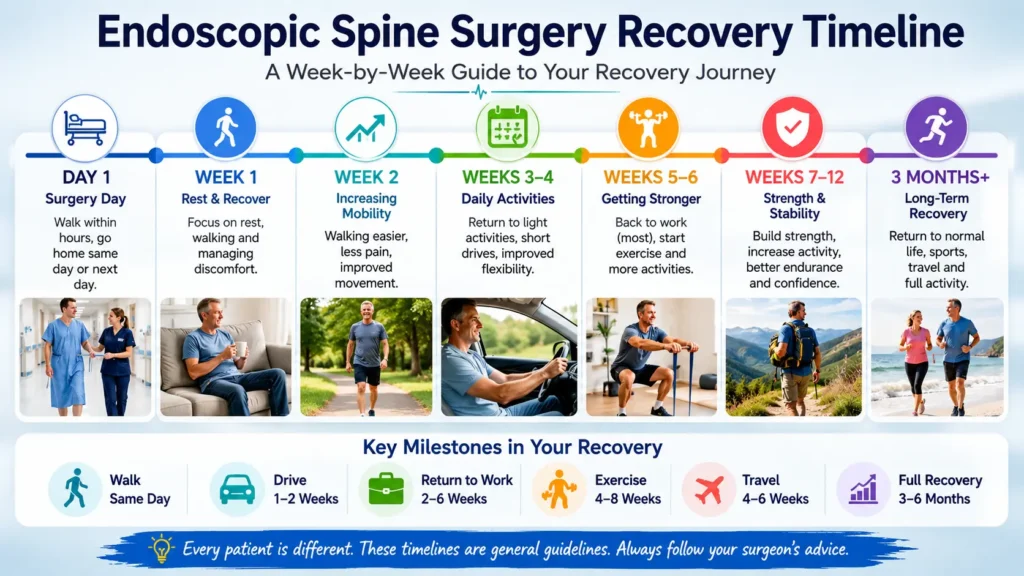
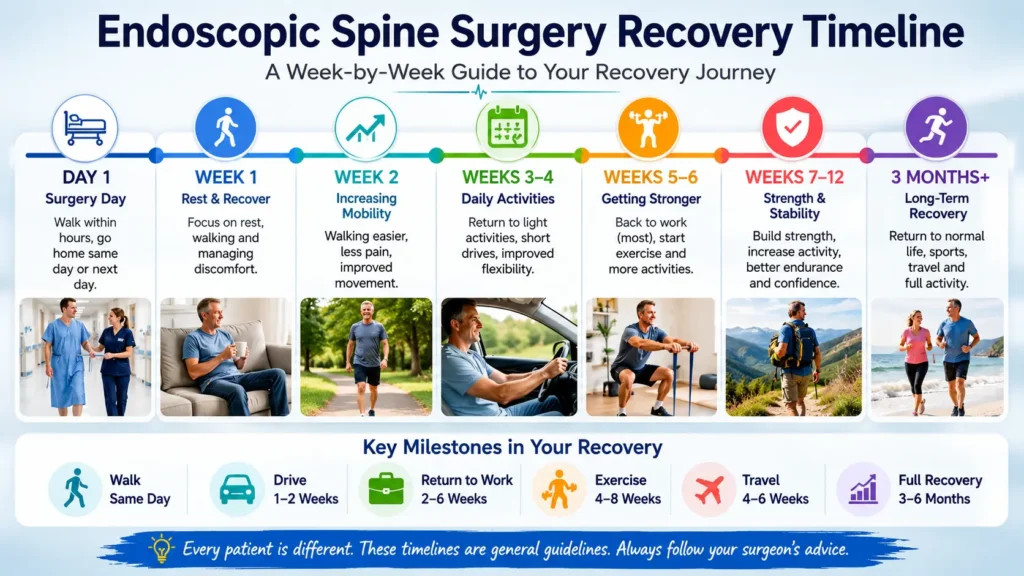
- Recovery Timeline at a Glance
- Understanding Recovery
- Day 1 After Surgery
- Week 1 Recovery
- Week 2 Recovery
- Weeks 3-4 Recovery
- Weeks 5-6 Recovery
- Weeks 7-12 Recovery
- Three Months and Beyond
- Real Patient Recovery Example
Quick Answer: How Long Does Recovery Take?
Most patients recover from endoscopic spine surgery significantly faster than they would after traditional open spine surgery.
While individual recovery varies, many patients follow a timeline similar to the following:
- Walking: Same day
- Driving: 1-2 weeks
- Desk work: 1-2 weeks
- Light daily activities: 2-4 weeks
- Exercise: 4-8 weeks
- Heavy physical work: 6-12 weeks
- Sports and higher-impact activities: 8-12 weeks
- Full recovery: 3-6 months
Patients often notice relief from leg pain very quickly. However, symptoms such as numbness, tingling, or nerve sensitivity may take longer to improve because nerves heal more slowly than muscles and soft tissues.
What Is Endoscopic Spine Surgery?
Endoscopic spine surgery is a minimally invasive surgical technique used to treat spinal conditions through a very small incision.
Instead of making a large incision and separating large amounts of muscle tissue, the surgeon uses a specialized endoscope containing a tiny camera and surgical instruments to access the affected area.
Common conditions treated with endoscopic spine surgery include:
- Lumbar disc herniation
- Sciatica
- Nerve compression
- Lumbar spinal stenosis
- Cervical nerve impingement
- Degenerative spine conditions
Compared with traditional open surgery, endoscopic procedures generally result in:
- Smaller incisions
- Less muscle disruption
- Reduced blood loss
- Less post-operative pain
- Lower infection risk
- Faster recovery times
- Earlier return to work and normal activities
Because healthy tissues are preserved as much as possible, patients often recover faster and experience less discomfort during the healing process.
Endoscopic Spine Surgery Recovery Timeline at a Glance
| Activity | Typical Recovery Timeline |
|---|---|
| Walking | Same day |
| Climbing stairs | 1-3 days |
| Short car rides | Several days |
| Driving | 1-2 weeks |
| Desk work | 1-2 weeks |
| Light household tasks | 2-3 weeks |
| Exercise | 4-8 weeks |
| Heavy manual work | 6-12 weeks |
| Sports participation | 8-12 weeks |
| Maximum recovery | 3-6 months |
Think of this timeline as a general guide rather than a strict rule. Recovery depends on your specific condition, procedure, and overall health.
Understanding Recovery: What Is Normal?
One of the biggest misconceptions about spine surgery is that recovery happens in a perfectly straight line.
In reality, healing occurs in stages. Some days may feel better than others.
During recovery, it is completely normal to experience:
- Mild incision soreness
- Back stiffness
- Muscle tightness
- Occasional tingling sensations
- Fluctuating numbness
- Temporary nerve irritation
Many patients become concerned when symptoms briefly return after initially improving. In many cases, this is simply part of the normal healing process.
Healing nerves can produce temporary sensations such as:
- Pins and needles
- Burning sensations
- Electric-shock feelings
- Warm or cold sensations in the leg
Understanding what is normal can help reduce anxiety and allow you to focus on long-term progress rather than day-to-day fluctuations.
Day 1: The Day of Surgery
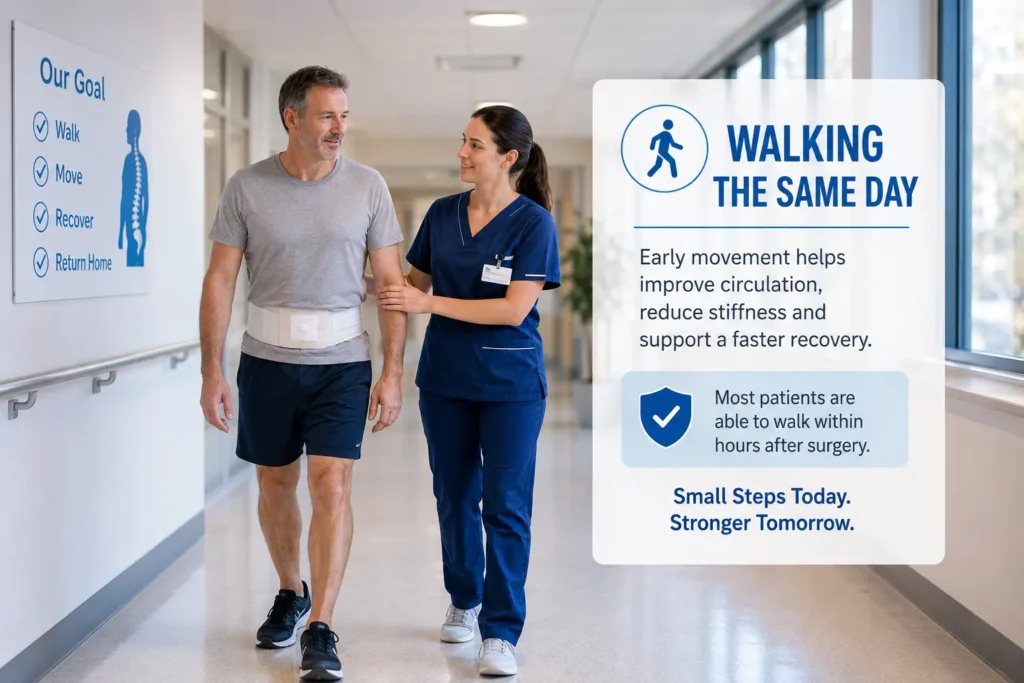
Many patients are surprised by how quickly they are encouraged to move after endoscopic spine surgery.
Depending on the procedure performed, you may:
- Walk within a few hours
- Eat and drink normally
- Return home the same day
- Manage discomfort using oral pain medication
Walking is one of the most important activities during the first day because it:
- Improves circulation
- Reduces stiffness
- Helps prevent blood clots
- Supports healing
At this stage, focus on gentle movement rather than exercise.
If you would like detailed guidance, read our complete article on Walking After Endoscopic Spine Surgery.
Week 1: Protecting the Surgical Area
The first week is primarily focused on healing and gentle mobility.
Common Symptoms During Week One
- Mild back discomfort
- Incision tenderness
- Fatigue
- Muscle tightness
- Improvement in leg pain
Many patients notice that their leg pain improves quickly, while numbness or tingling may remain unchanged initially.
Recommended Activities
- Frequent short walks
- Light stretching if approved
- Changing positions regularly
- Maintaining hydration
- Healthy nutrition
Activities to Avoid
- Heavy lifting
- Twisting motions
- Repeated bending
- Running
- Gym workouts
Your body is still in the early stages of healing, and protecting the surgical area is critical.
Week 2: Regaining Confidence
By the second week, many patients begin noticing meaningful improvements.
Walking distances often increase, sleep quality improves, and pain levels continue to decrease.
Typical Improvements
- Better mobility
- Reduced pain
- Improved confidence
- Less reliance on medication
- Increased energy levels
Many individuals begin returning to light daily activities and desk-based work during this period.
If your job primarily involves sitting at a computer, you may find our guide on Return to Work After Endoscopic Spine Surgery helpful.
Remember that recovery is individual. Some patients recover faster, while others require additional time.
Weeks 3-4: Building Momentum
Weeks three and four often represent a major turning point in recovery.
Many patients begin feeling significantly better and become eager to return to normal life.
What Typically Improves?
- Walking becomes easier
- Endurance increases
- Pain continues to improve
- Daily activities become more comfortable
- Confidence grows
Although you may feel substantially better, internal healing continues beneath the surface.
This is often the stage where patients accidentally overdo activities because they feel good.
Continue following your surgeon’s advice and avoid rushing back into strenuous activities.
Exercise Progression
Depending on your recovery, your surgeon may allow:
- Stationary cycling
- Walking programs
- Gentle stretching
- Basic core exercises
The goal is gradual progress rather than rapid advancement.
Weeks 5-6: Returning to Normal Activities
By this stage, many patients begin feeling close to normal during daily activities.
Typical Milestones
- Improved endurance
- Longer walks
- Better flexibility
- Less stiffness
- Increased independence
Patients with office-based jobs are usually back to work at this stage, while physically demanding occupations may require additional recovery time.
Heavy lifting should still be approached cautiously.
Healing continues even when symptoms have improved significantly.
Weeks 7-12: Strength and Stability
Between weeks seven and twelve, most patients experience substantial improvements in their quality of life.
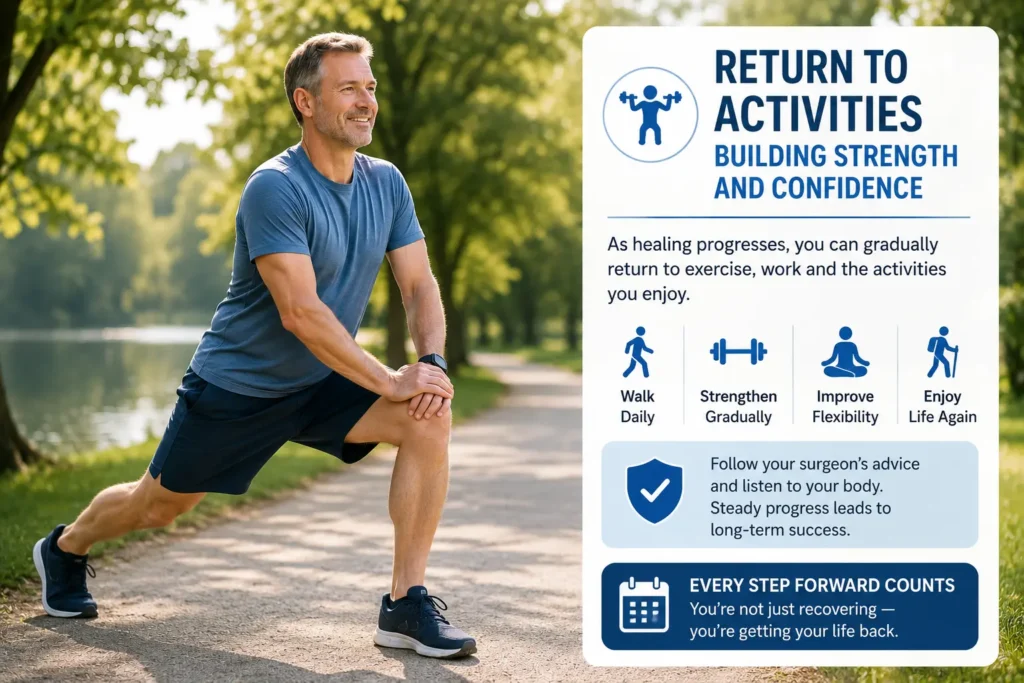
Many can comfortably:
- Travel
- Exercise regularly
- Participate in hobbies
- Spend longer periods walking
- Resume social activities
The focus gradually shifts from healing toward rebuilding strength and conditioning.
Core strength, flexibility, posture, and endurance become increasingly important.
This phase lays the foundation for long-term spine health.
Three Months and Beyond
Most patients have returned to the majority of normal activities by three months after surgery.
However, healing does not necessarily stop at the three-month mark.
Patients who experienced prolonged nerve compression before surgery may continue noticing improvements for six months or longer.
In some cases, nerve recovery continues for up to a year.
Patience remains essential, particularly when recovering from symptoms such as numbness or weakness.
For more information, read our detailed guide on Why Is My Leg Still Numb After Endoscopic Spine Surgery?.
Real Patient Recovery Example
To better understand what recovery looks like, consider the following example.
Patient: 45-year-old office worker with a lumbar disc herniation causing severe sciatica.
Day 1
- Walking independently
- Discharged home
- Leg pain significantly reduced
Week 1
- Short walks several times daily
- Mild incision soreness
- Improved sleep
Week 2
- Returned to desk-based work from home
- Minimal pain medication needed
- Walking comfortably outdoors
Week 4
- Driving independently
- Resumed light exercise
- Daily activities largely normal
Week 8
- Returned to gym-based exercise
- Improved strength and endurance
- No significant leg pain
Three Months
- Fully active lifestyle
- Regular exercise routine
- Excellent quality of life
Not every patient follows the same timeline, but this example illustrates the type of progress many individuals achieve after successful endoscopic spine surgery.
Recovery by Age Group
One of the most common concerns patients have is whether age will affect their recovery after endoscopic spine surgery.
While age can influence healing speed, it is often not the most important factor. Overall fitness, mobility, smoking status, body weight, and underlying medical conditions usually play a larger role.
Patients Under 40
Younger patients often recover more quickly because they typically have better muscle strength, tissue healing capacity, and overall fitness.
- Earlier return to exercise
- Faster tissue healing
- Lower rates of chronic degeneration
- Quicker return to work
Patients Aged 40-60
This group represents many patients undergoing endoscopic spine surgery. Recovery is usually excellent, particularly when patients remain active and follow rehabilitation recommendations.
- Walking often improves quickly
- Return to desk work within 1-2 weeks
- Return to exercise within 4-8 weeks
- Excellent long-term outcomes
Patients Over 60
Older patients may require slightly longer recovery periods, but many still experience significant improvements in pain and mobility.
- Recovery may progress more gradually
- Balance and strength training become important
- Walking programs can accelerate recovery
- Endoscopic techniques often avoid the prolonged recovery associated with open surgery
Recovery by Procedure Type
Recovery timelines vary depending on the specific procedure performed.
| Procedure | Typical Recovery Timeline |
|---|---|
| Endoscopic Discectomy | 2-6 weeks |
| Endoscopic Decompression | 4-8 weeks |
| Endoscopic Foraminotomy | 4-8 weeks |
| Lumbar Microdiscectomy | 6-12 weeks |
| Open Laminectomy | 6-12 weeks |
| Lumbar Fusion | 3-6 months or longer |
Generally speaking, endoscopic procedures offer faster recovery because they minimize disruption to muscles and surrounding soft tissues.
For a detailed comparison, read:
Endoscopic Spine Surgery vs Microdiscectomy Recovery
Exercise Progression Guide After Endoscopic Spine Surgery
Returning to exercise too quickly is one of the most common reasons patients experience setbacks during recovery.
The goal is gradual progression rather than immediate return to pre-surgery activity levels.
Weeks 1-2
- Walking
- Gentle mobility exercises
- Light stretching if approved
Avoid:
- Running
- Weightlifting
- Core workouts
- High-impact exercise
Weeks 3-6
- Longer walks
- Stationary cycling
- Gentle core activation
- Light flexibility exercises
Weeks 6-12
- Swimming
- Resistance bands
- Bodyweight exercises
- Light gym-based strengthening
Beyond 12 Weeks
- Progressive strength training
- Running if approved
- Sports-specific training
- Advanced conditioning
The safest approach is always to increase activity gradually while monitoring symptoms.
Returning to Travel After Endoscopic Spine Surgery
Many patients ask when they can safely travel after surgery.
Short Car Trips
Most patients can tolerate short car journeys within the first week.
Take breaks regularly and avoid sitting for prolonged periods.
Long Car Journeys
Long drives are usually better delayed for several weeks.
Stop frequently to walk and stretch.
Air Travel
Many patients can fly within several weeks, depending on their recovery and surgeon’s recommendations.
During flights:
- Walk periodically
- Stay hydrated
- Perform ankle exercises
- Avoid remaining seated for extended periods
If travel is unavoidable shortly after surgery, discuss your plans with your surgeon beforehand.
Returning to Sports After Endoscopic Spine Surgery
Most active patients want to know when they can safely return to sports.
The answer depends on the sport, your recovery progress, and the condition treated.
Lower Impact Activities
Often resumed earlier:
- Walking
- Cycling
- Swimming
- Golf
Moderate Impact Activities
- Tennis
- Hiking
- Gym training
- Fitness classes
These are often resumed between 8 and 12 weeks.
High Impact Activities
- Football
- Rugby
- Martial arts
- Competitive athletics
These may require a longer recovery period and individualized guidance.
7 Common Recovery Mistakes That Can Slow Healing
Even when surgery is successful, recovery can be delayed by avoidable mistakes.
1. Sitting Too Long
Prolonged sitting increases spinal pressure and stiffness.
2. Returning to the Gym Too Early
Feeling better does not mean the spine is fully healed.
3. Ignoring Walking
Walking remains one of the most effective recovery activities.
4. Lifting Heavy Objects Too Soon
Early lifting can stress healing tissues.
5. Smoking
Smoking reduces blood flow and slows recovery.
6. Poor Posture
Good posture reduces unnecessary strain on the spine.
7. Skipping Follow-Up Appointments
Regular reviews help identify issues before they become significant problems.
Read more in our detailed guide:
7 Mistakes That Can Slow Recovery After Endoscopic Spine Surgery
Long-Term Outcomes After Endoscopic Spine Surgery
Most patients undergo surgery because they want long-lasting relief from symptoms.
When performed for the appropriate condition and followed by proper rehabilitation, endoscopic spine surgery can provide excellent long-term outcomes.
Common long-term benefits include:
- Reduced leg pain
- Improved walking tolerance
- Better quality of life
- Greater physical activity
- Reduced dependence on pain medication
- Improved sleep
Long-term success is often influenced by:
- Maintaining a healthy weight
- Regular exercise
- Good posture
- Core strengthening
- Avoiding smoking
Warning Signs That Require Medical Attention
Although complications are uncommon, patients should know when to seek medical advice.
Contact your surgeon if you experience:
- Increasing weakness
- Severe worsening pain
- New numbness
- Loss of bladder control
- Loss of bowel control
- Fever
- Drainage from the incision
- Signs of infection
Early evaluation can help prevent more serious problems.
Frequently Asked Questions
Can I walk immediately after endoscopic spine surgery?
Many patients are encouraged to walk within hours of surgery.
Read more about walking after endoscopic spine surgery.
When can I drive after spine surgery?
Most patients resume driving once they are comfortable and no longer taking strong pain medication.
Read more about driving after spine surgery.
Can I climb stairs after surgery?
Many patients can climb stairs within the first few days, depending on comfort and balance.
What is the best sleeping position after spine surgery?
Sleeping on your back with support under the knees or on your side with a pillow between the knees is often recommended.
Read more about sleeping positions after spine surgery.
Why is my leg still numb after surgery?
Nerves heal slowly and numbness may take weeks or months to improve.
Read more about numbness after spine surgery.
When can I return to work?
Desk jobs often resume within 1-2 weeks, while physical jobs may require longer recovery.
Read more about returning to work after surgery.
Can I travel after surgery?
Yes, but timing depends on your recovery progress and travel distance.
Can I go to the gym after surgery?
Most patients gradually return to gym activities after several weeks.
Can a herniated disc come back after surgery?
Recurrence is possible but relatively uncommon when recovery guidelines are followed.
How long does nerve healing take?
Nerve recovery may continue for several months after surgery.
When can I return to sports?
Most patients resume sports between 8 and 12 weeks depending on the activity.
Will I need physiotherapy?
Some patients benefit significantly from a structured rehabilitation program.
How painful is recovery after endoscopic spine surgery?
Most patients experience less pain than with traditional open spine surgery.
Can I sleep on my side after surgery?
Yes, many patients find side sleeping comfortable when supported properly.
Is endoscopic spine surgery safer than open surgery?
For suitable patients, endoscopic techniques often reduce tissue trauma and recovery time.
Final Thoughts
Endoscopic spine surgery has transformed the recovery experience for many patients suffering from disc herniation, sciatica, spinal stenosis, and nerve compression.
Most patients recover faster than they would after traditional open surgery, but healing still requires patience and commitment. Following your surgeon’s advice, staying active within safe limits, maintaining healthy habits, and progressing gradually through recovery milestones can significantly improve your long-term outcome.
Remember that every recovery journey is unique. Focus on steady improvement rather than comparing yourself to others. With proper care and realistic expectations, most patients can return to work, exercise, travel, and enjoy an active lifestyle again.