
Endoscopic spine surgery is designed to help patients recover faster than traditional open spine surgery. Smaller incisions, less muscle disruption, and earlier mobility often allow people to return to daily activities much sooner.
However, surgery is only one part of the recovery process.
Even when the procedure is technically successful, certain habits and mistakes can delay healing, increase discomfort, and prolong recovery.
Many patients feel significantly better within the first few weeks after surgery and naturally want to get back to normal life as quickly as possible. While this enthusiasm is understandable, doing too much too soon can sometimes create unnecessary setbacks.
In this guide, we discuss seven common mistakes that can slow recovery after endoscopic spine surgery and explain how to avoid them.
For a complete recovery roadmap, read our Endoscopic Spine Surgery Recovery Time Guide.
Why Recovery Requires Patience
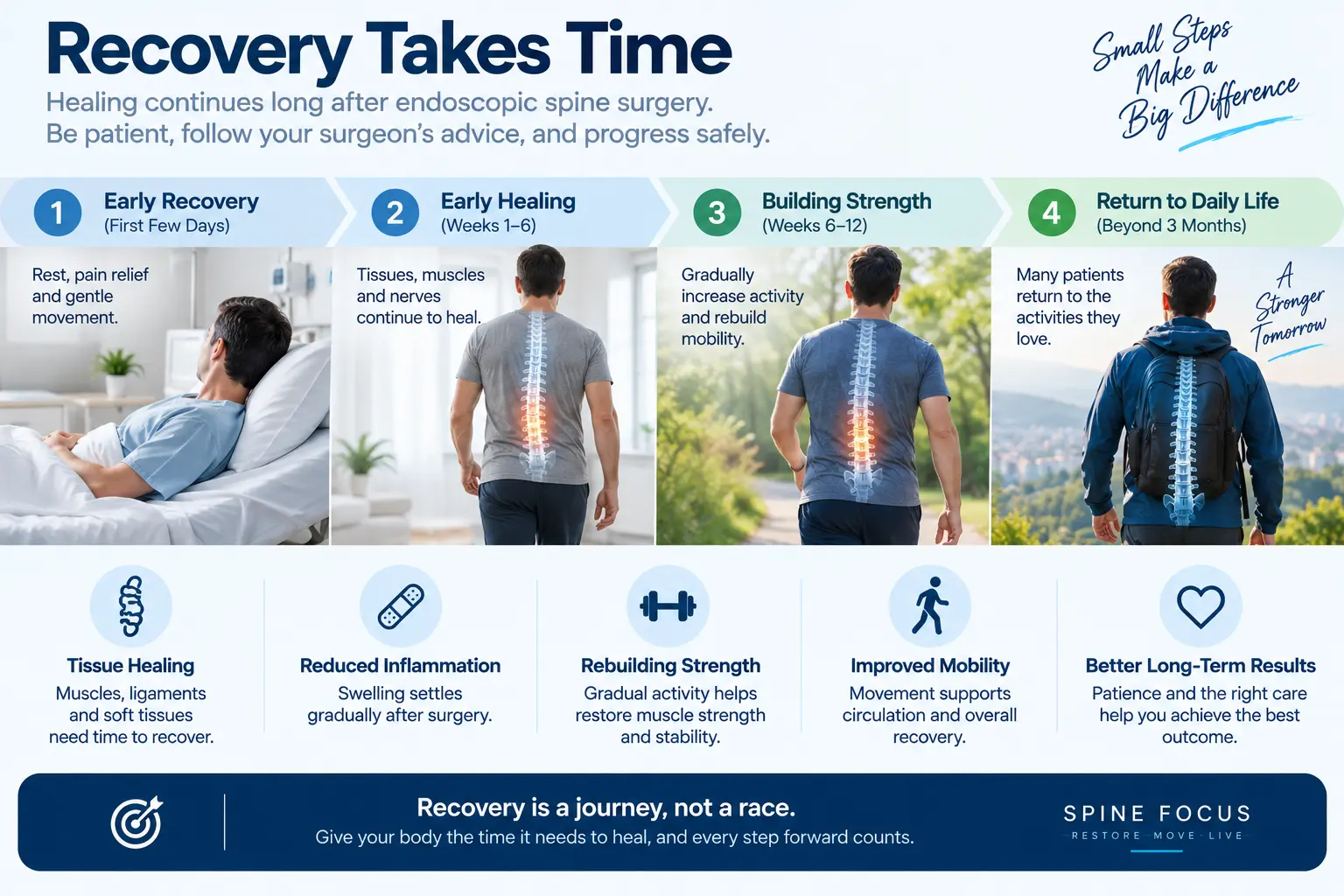
One of the biggest misconceptions about spine surgery is that recovery is complete once pain improves.
While many patients experience early relief of leg pain and sciatica, internal healing continues for weeks and months after surgery.
Muscles, ligaments, soft tissues, and nerves all require time to recover.
The goal is not simply to feel better quickly. The goal is to heal properly and achieve a successful long-term outcome.
Mistake #1: Doing Too Much Too Soon
This is probably the most common recovery mistake.
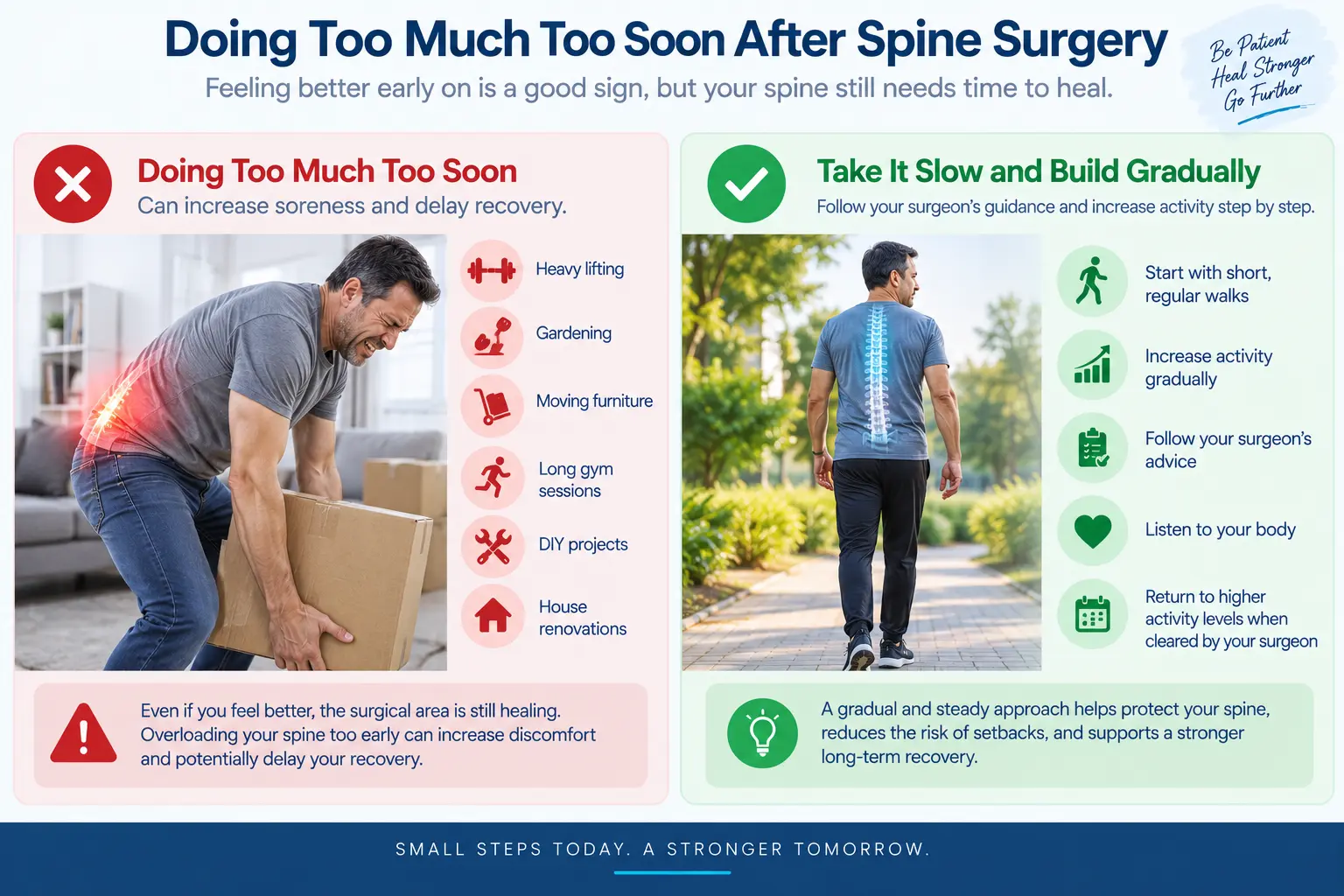
Many patients experience dramatic improvement in symptoms shortly after surgery. As a result, they assume they are fully healed and return to normal activities too quickly.
Examples include:
- Heavy lifting
- Gardening
- Moving furniture
- Long gym sessions
- DIY projects
- House renovations
Although pain may have improved, the surgical area is still healing.
Overloading the spine too early can increase soreness and potentially delay recovery.
What To Do Instead
Follow the activity progression recommended by your surgeon and increase physical activity gradually.
Mistake #2: Spending Too Much Time in Bed
Many people assume that bed rest is the best way to recover from spine surgery.
In reality, prolonged bed rest often creates more problems than it solves.
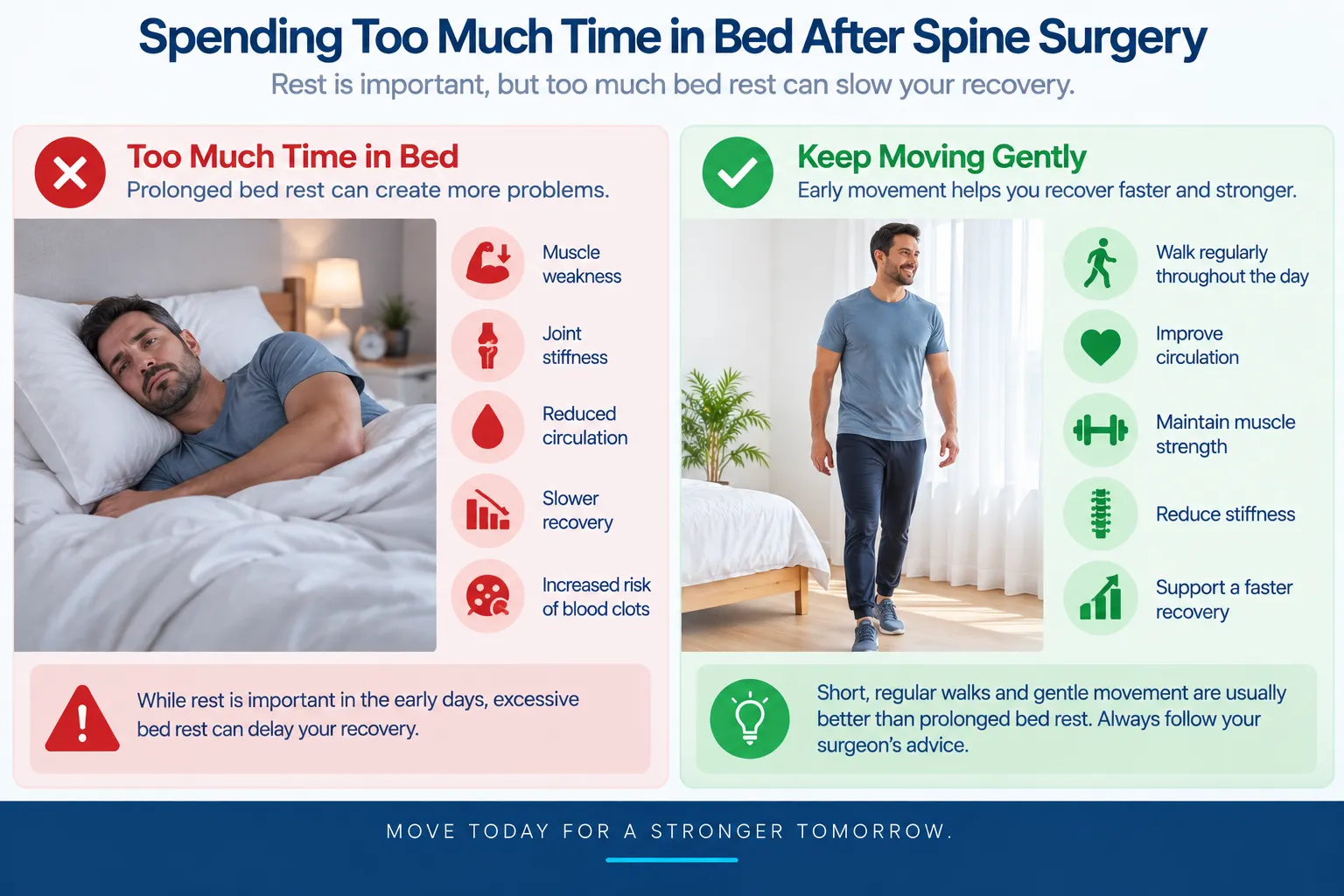
Excessive inactivity can lead to:
- Muscle weakness
- Joint stiffness
- Reduced circulation
- Slower recovery
- Increased risk of blood clots
Modern recovery protocols encourage early movement whenever appropriate.
What To Do Instead
Walk regularly throughout the day and avoid remaining in one position for extended periods.
Read more in:
Walking After Endoscopic Spine Surgery
Mistake #3: Sitting for Long Periods
Sitting may seem harmless, but prolonged sitting places significant pressure on the lower back.
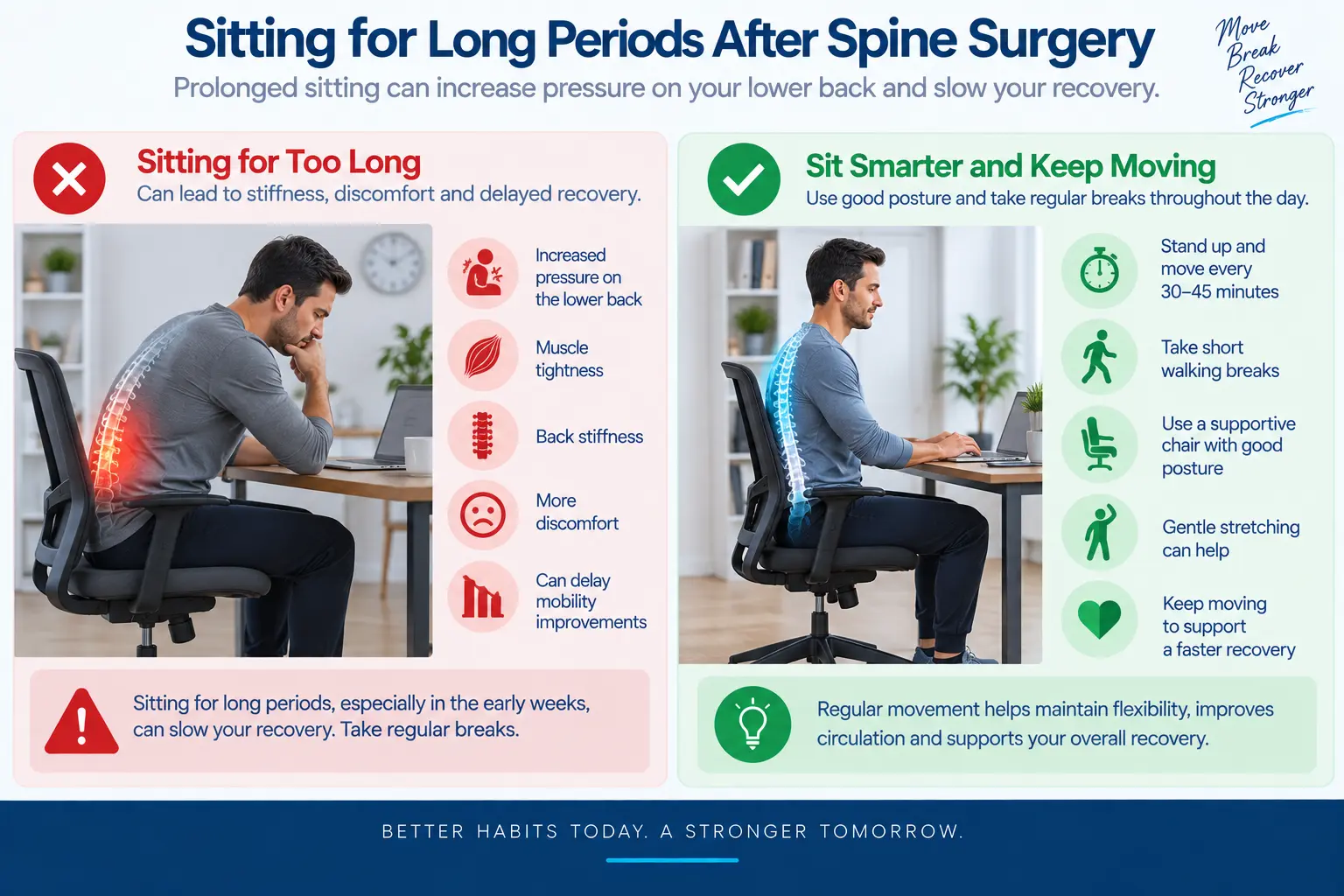
Many patients return to:
- Office work
- Watching television
- Long car journeys
- Computer use
too quickly without taking regular breaks.
This can contribute to:
- Back stiffness
- Muscle tightness
- Increased discomfort
- Delayed mobility improvements
What To Do Instead
Stand up, stretch, and walk every 30 to 45 minutes.
Mistake #4: Ignoring Walking and Gentle Exercise
Some patients become overly cautious and avoid movement because they fear damaging the surgical site.
While excessive activity can be problematic, complete avoidance of movement is equally unhelpful.
Walking is one of the safest and most beneficial activities after endoscopic spine surgery.
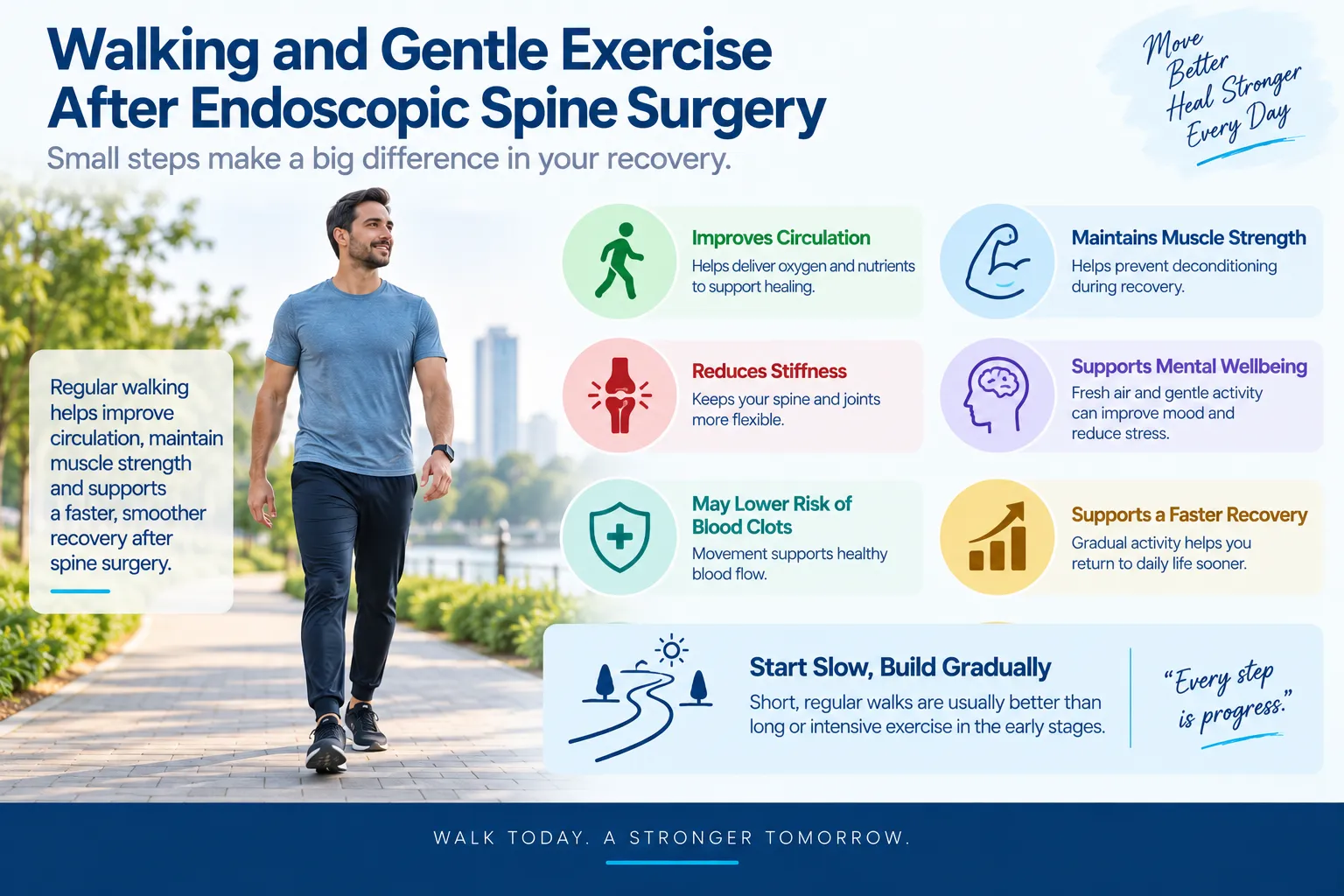
Benefits include:
- Improved circulation
- Reduced stiffness
- Better endurance
- Enhanced recovery
- Improved confidence
What To Do Instead
Follow a structured walking program and gradually increase activity levels.
Mistake #5: Smoking During Recovery
Smoking affects healing throughout the body.
Nicotine reduces blood flow to tissues and can interfere with recovery.
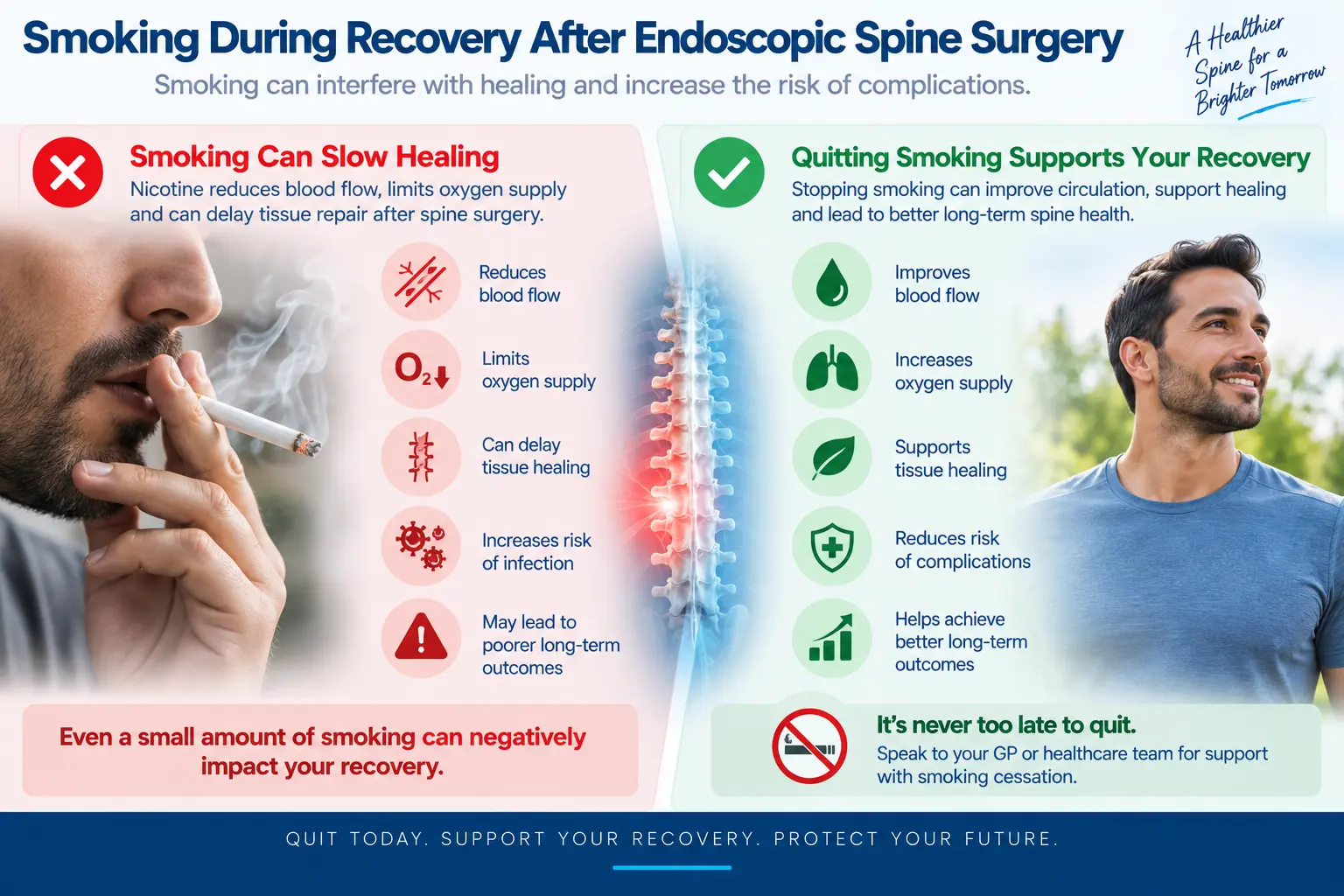
Research has shown that smoking may negatively affect:
- Wound healing
- Bone health
- Tissue recovery
- Long-term surgical outcomes
Patients who smoke are often encouraged to stop before and after surgery whenever possible.
What To Do Instead
If you smoke, discuss smoking cessation strategies with your healthcare provider.
Mistake #6: Returning to the Gym Too Early
Many active patients are eager to resume their exercise routines.
Unfortunately, the gym is often where recovery setbacks occur.
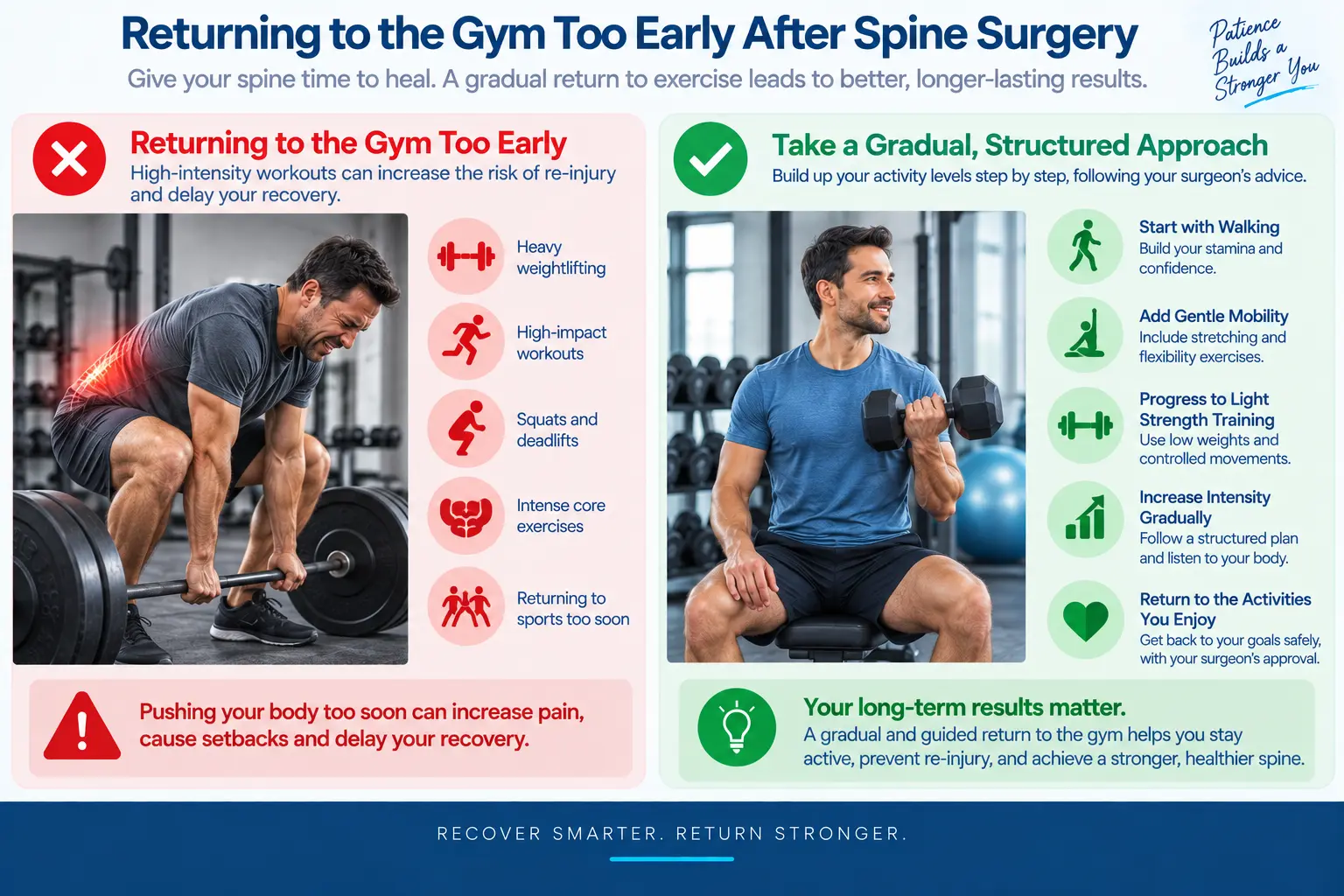
Common mistakes include:
- Deadlifts too soon
- Heavy squats
- High-impact workouts
- Core exercises that place excessive strain on the spine
Even when the incision has healed, deeper tissues continue recovering.
What To Do Instead
Progress through exercise gradually.
Begin with:
- Walking
- Gentle stretching
- Stationary cycling
- Light rehabilitation exercises
before advancing to heavier activities.
Mistake #7: Ignoring Persistent Symptoms
Some symptoms during recovery are normal.
Others require medical review.
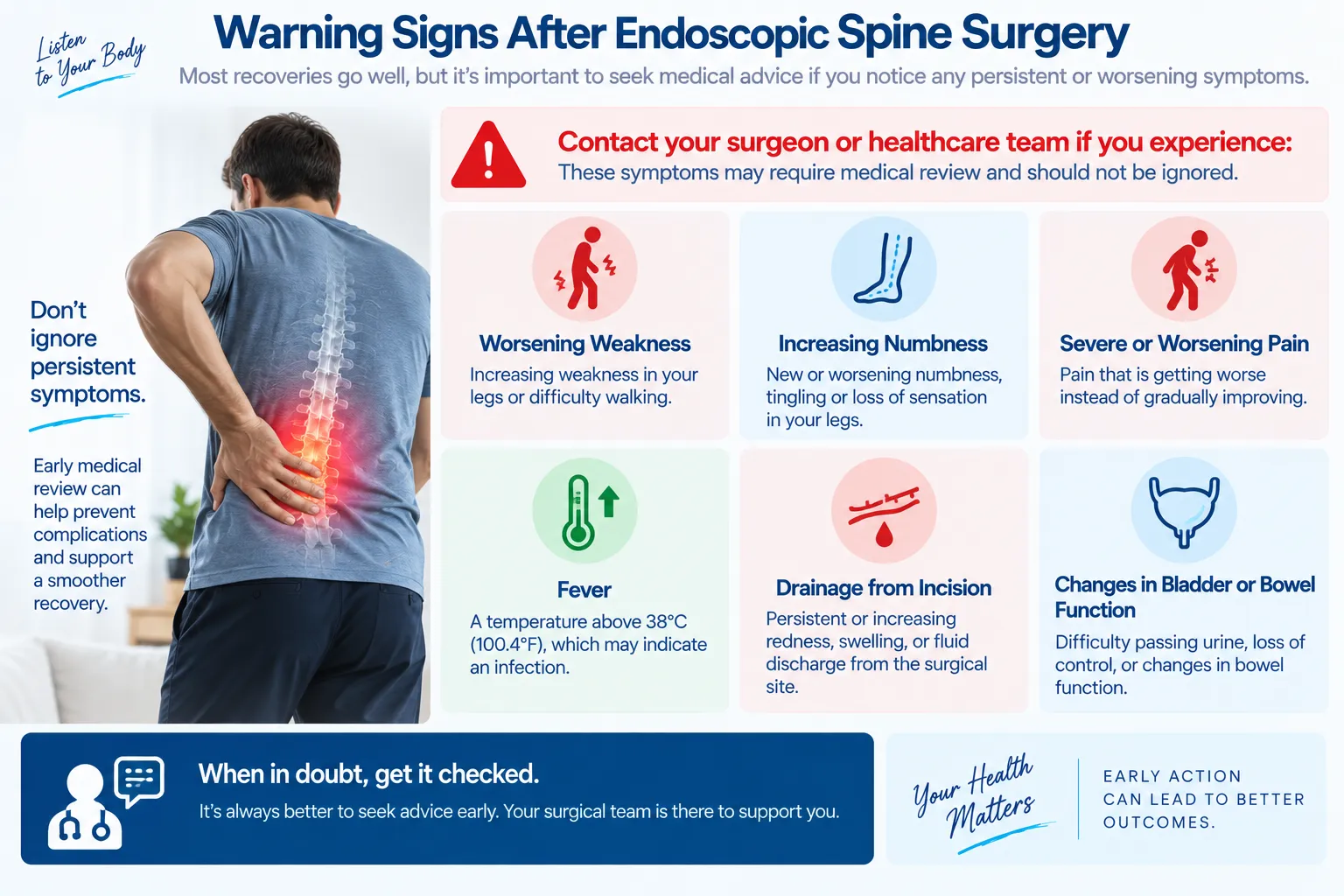
Patients sometimes delay seeking help because they assume every symptom is part of the healing process.
This can occasionally allow problems to worsen.
Contact Your Surgeon If You Experience:
- Increasing weakness
- Progressively worsening numbness
- Severe worsening pain
- Fever
- Drainage from the incision
- Loss of bladder control
- Loss of bowel control
Prompt evaluation can provide reassurance and identify complications if they occur.
Bonus Mistake: Comparing Your Recovery to Someone Else’s
Every patient heals differently.
Age, fitness, overall health, nerve damage, and the condition being treated all influence recovery speed.
One patient may return to work in a week, while another requires several weeks.
Both recoveries can be completely normal.
Focus on your own progress rather than comparing yourself with friends, family members, or online stories.
Signs Your Recovery Is Going Well

Positive signs during recovery include:
- Reduced pain
- Improved walking tolerance
- Better sleep
- Increased mobility
- Reduced reliance on medication
- Improved confidence
- Gradual return to normal activities
Remember that recovery rarely progresses perfectly every day.
Small fluctuations are common and do not necessarily indicate a problem.
Final Thoughts
Recovering from endoscopic spine surgery is often faster than recovering from traditional open surgery, but healing still takes time.
Avoiding common mistakes such as doing too much too soon, remaining inactive, sitting excessively, smoking, and rushing back to the gym can significantly improve your recovery experience.
Most importantly, focus on gradual progress rather than perfection. Small improvements add up over time and help create the best possible long-term outcome.
For a complete week-by-week recovery timeline, visit our Endoscopic Spine Surgery Recovery Time Guide.
Frequently Asked Questions
What is the biggest mistake after spine surgery?
Doing too much too soon is one of the most common mistakes that can delay recovery.
Can walking too much slow recovery?
Walking is generally beneficial, but excessive activity that significantly increases pain should be avoided.
Is bed rest recommended after endoscopic spine surgery?
Prolonged bed rest is generally discouraged because it may slow recovery and increase stiffness.
When can I return to the gym?
This varies between patients, but most people should gradually progress through rehabilitation before returning to heavier training.
Is numbness normal during recovery?
Yes. Nerves often heal slowly, and numbness may persist for weeks or months.
Read Why Is My Leg Still Numb After Endoscopic Spine Surgery?