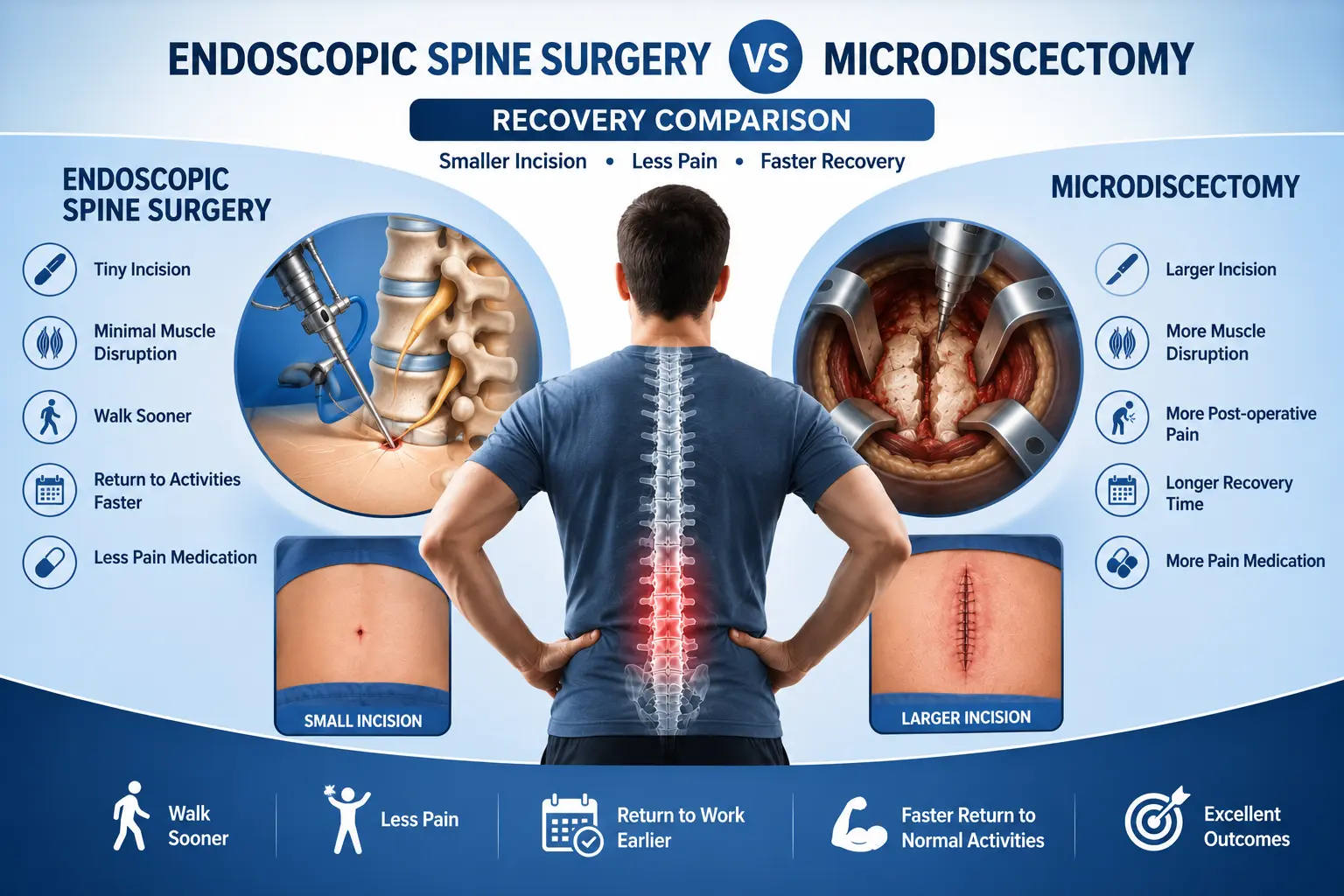
If you have been diagnosed with a herniated disc or nerve compression, you may have come across two common treatment options: endoscopic spine surgery and microdiscectomy.
Both procedures are designed to relieve pressure on spinal nerves and reduce symptoms such as sciatica, leg pain, numbness, and weakness.
One of the most important questions patients ask is:
“Which procedure has the easier recovery?”
While both surgeries can provide excellent outcomes, recovery experiences can differ significantly.
In this guide, we compare recovery after endoscopic spine surgery and microdiscectomy, including pain levels, mobility, return to work, exercise, and long-term outcomes.
For a complete recovery roadmap, see our Endoscopic Spine Surgery Recovery Time Guide.
Quick Answer
In general, endoscopic spine surgery offers a faster recovery than traditional microdiscectomy because it uses a smaller incision and causes less disruption to surrounding muscles and tissues.
Many patients undergoing endoscopic surgery:
- Walk sooner
- Experience less post-operative pain
- Return to work earlier
- Require less pain medication
- Resume normal activities more quickly
However, both procedures can be highly effective when performed for the right patient and condition.
What Is Endoscopic Spine Surgery?
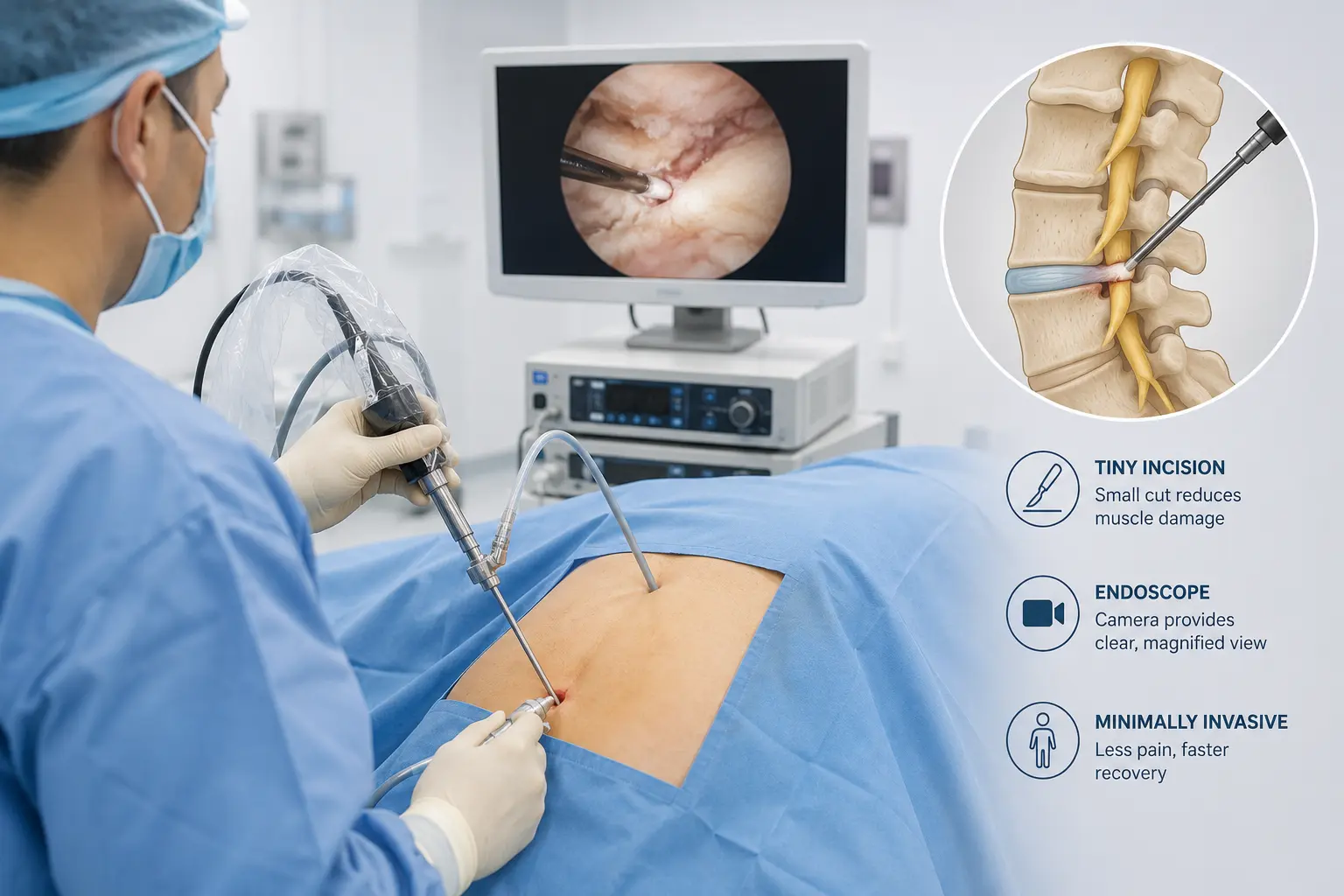
Endoscopic spine surgery is a minimally invasive procedure that uses a small camera and specialized instruments inserted through a tiny incision.
The surgeon can visualize and treat the affected area while minimizing damage to surrounding tissues.
Common conditions treated include:
- Lumbar disc herniation
- Sciatica
- Spinal stenosis
- Nerve root compression
One of the main goals of endoscopic surgery is preserving healthy muscles and soft tissues.
Advanced Techniques Supported by Clinical Research
Mr. Desmond Sanusi is committed to using evidence-based techniques in modern spine care. He is a co-author of a peer-reviewed publication in the Journal of Neurosurgery: Case Lessons, which demonstrated how robotic-assisted surgery and advanced navigation technology can improve precision when treating complex spinal conditions. Although the study focused on a rare cervical condition, it highlights the importance of meticulous planning and modern technology in complex spine surgery.
What Is a Microdiscectomy?
A microdiscectomy is a well-established surgical procedure used to remove part of a herniated disc that is compressing a spinal nerve.
Although considered minimally invasive compared to traditional open surgery, microdiscectomy generally involves:
- A larger incision than endoscopic surgery
- More tissue dissection
- Greater muscle retraction
Microdiscectomy remains an effective and widely performed procedure worldwide.
Endoscopic Spine Surgery vs Microdiscectomy: Recovery Comparison Table
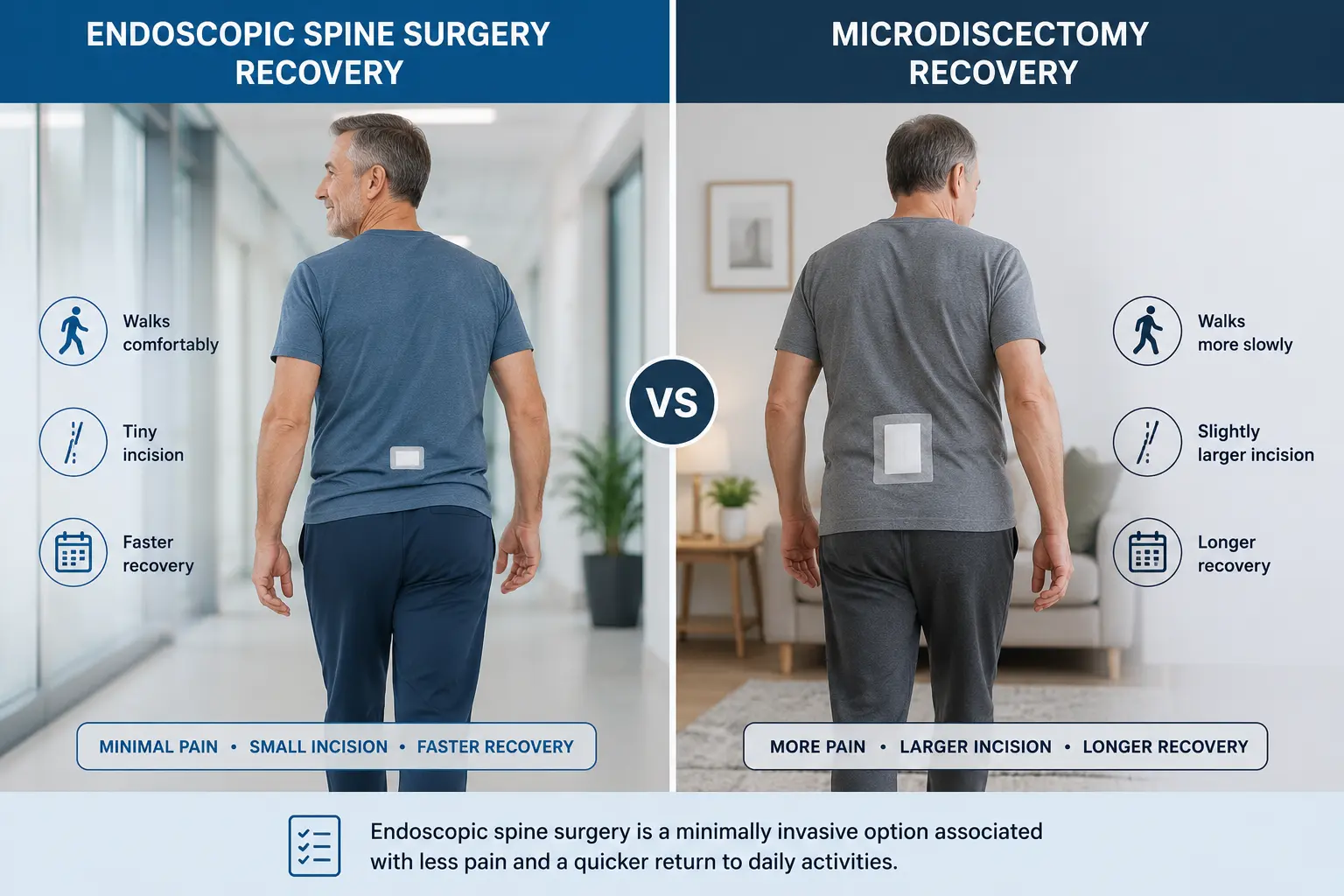
| Recovery Factor | Endoscopic Spine Surgery | Microdiscectomy |
|---|---|---|
| Incision Size | Very small | Larger |
| Muscle Disruption | Minimal | Moderate |
| Post-operative Pain | Usually less | Usually more |
| Hospital Stay | Same day or overnight | Often overnight |
| Walking | Within hours | Usually same day |
| Return to Desk Work | 1-2 weeks | 2-6 weeks |
| Return to Exercise | 4-8 weeks | 6-12 weeks |
| Recovery Speed | Generally faster | Generally slower |
Post-Operative Pain: Which Procedure Hurts Less?
One of the biggest advantages of endoscopic spine surgery is reduced tissue trauma.
Because muscles are preserved rather than significantly retracted, many patients report:
- Less soreness
- Less incision pain
- Reduced need for pain medication
- Greater comfort during early recovery
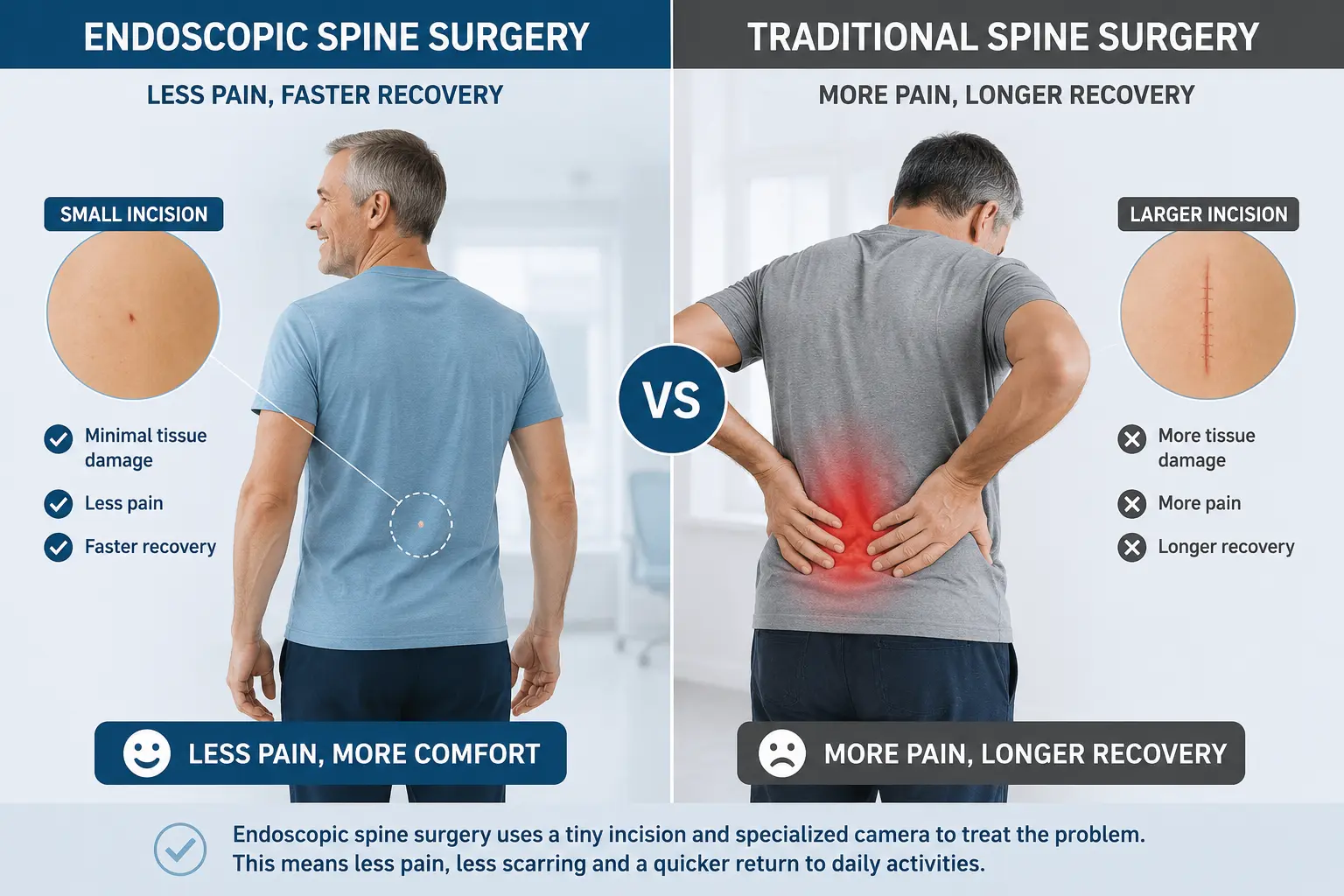
Microdiscectomy patients often recover well, but some experience more post-operative discomfort due to the greater amount of tissue manipulation.
Walking After Surgery
Walking is encouraged after both procedures.

Most patients begin walking on the day of surgery.
However, patients who undergo endoscopic surgery often find walking more comfortable during the first few days.
Learn more in our guide:
Walking After Endoscopic Spine Surgery
Returning to Work
Returning to work is one of the most important recovery milestones.
Endoscopic Spine Surgery
- Desk jobs: often 1-2 weeks
- Light physical work: 3-4 weeks
- Heavy labour: 6-12 weeks
Microdiscectomy
- Desk jobs: often 2-6 weeks
- Light physical work: 4-8 weeks
- Heavy labour: 8-12 weeks or longer
For a detailed breakdown, read:
Return to Work After Endoscopic Spine Surgery
Exercise Recovery Comparison
Patients frequently ask when they can return to exercise.

Although recovery varies, endoscopic surgery often allows a quicker progression.
| Activity | Endoscopic Surgery | Microdiscectomy |
|---|---|---|
| Walking | Same day | Same day |
| Stationary Cycling | 2-4 weeks | 4-6 weeks |
| Swimming | 4-6 weeks | 6-8 weeks |
| Gym Training | 6-8 weeks | 8-12 weeks |
| Sports | 8-12 weeks | 10-16 weeks |
Nerve Recovery: Is There a Difference?
Both procedures relieve nerve compression.
However, nerve healing itself follows similar biological timelines regardless of the surgical technique.
This means patients may still experience:
- Numbness
- Tingling
- Weakness
- Intermittent nerve sensations
for weeks or months after either procedure.
Read more in:
Why Is My Leg Still Numb After Endoscopic Spine Surgery?
Which Procedure Has the Smaller Scar?
Endoscopic spine surgery typically results in a much smaller scar.
Because the incision is smaller, patients often experience:
- Less tissue trauma
- Less scarring
- Improved cosmetic outcomes
For some patients, this may be an additional benefit.
Long-Term Outcomes
When performed for the correct indication, both procedures can provide excellent long-term results.
Patients undergoing either surgery often experience:
- Significant pain relief
- Improved mobility
- Better quality of life
- Return to normal activities
The primary difference is usually the recovery experience rather than the ultimate goal of treatment.
Who May Be a Good Candidate for Endoscopic Spine Surgery?
You may be a suitable candidate if you:
- Have a herniated disc
- Have sciatica
- Have nerve compression
- Want a minimally invasive approach
- Wish to return to activities as quickly as possible
Suitability depends on your specific condition and should always be assessed by a qualified spine surgeon.
How Mr. Desmond Sanusi Chooses the Right Procedure
At Spine Focus in London, Mr. Desmond Sanusi believes that the best procedure is the one that matches the patient’s condition, symptoms, and lifestyle.
During your consultation, he will review your MRI scan, examine your symptoms, and discuss your treatment goals before recommending the most appropriate option. While many patients benefit from endoscopic spine surgery because of its minimally invasive nature and faster recovery, microdiscectomy may still be the most suitable treatment for certain cases.
The decision is always personalised, ensuring that each patient receives the safest and most effective treatment for their individual condition.
Final Thoughts
Both endoscopic spine surgery and microdiscectomy are effective treatments for herniated discs and nerve compression.
However, one of the biggest advantages of endoscopic spine surgery is its ability to minimize tissue disruption and often provide a faster, more comfortable recovery.
Many patients experience earlier mobility, reduced pain, and a quicker return to work and daily activities.
If you are considering surgery and would like to understand your options, discuss the advantages and limitations of each procedure with an experienced spine surgeon.
If you are considering surgery and would like to understand whether endoscopic spine surgery or microdiscectomy is right for you, arrange a consultation with Mr. Desmond Sanusi at Spine Focus in London. A personalised assessment can help determine the most appropriate treatment based on your symptoms, MRI findings, and recovery goals.
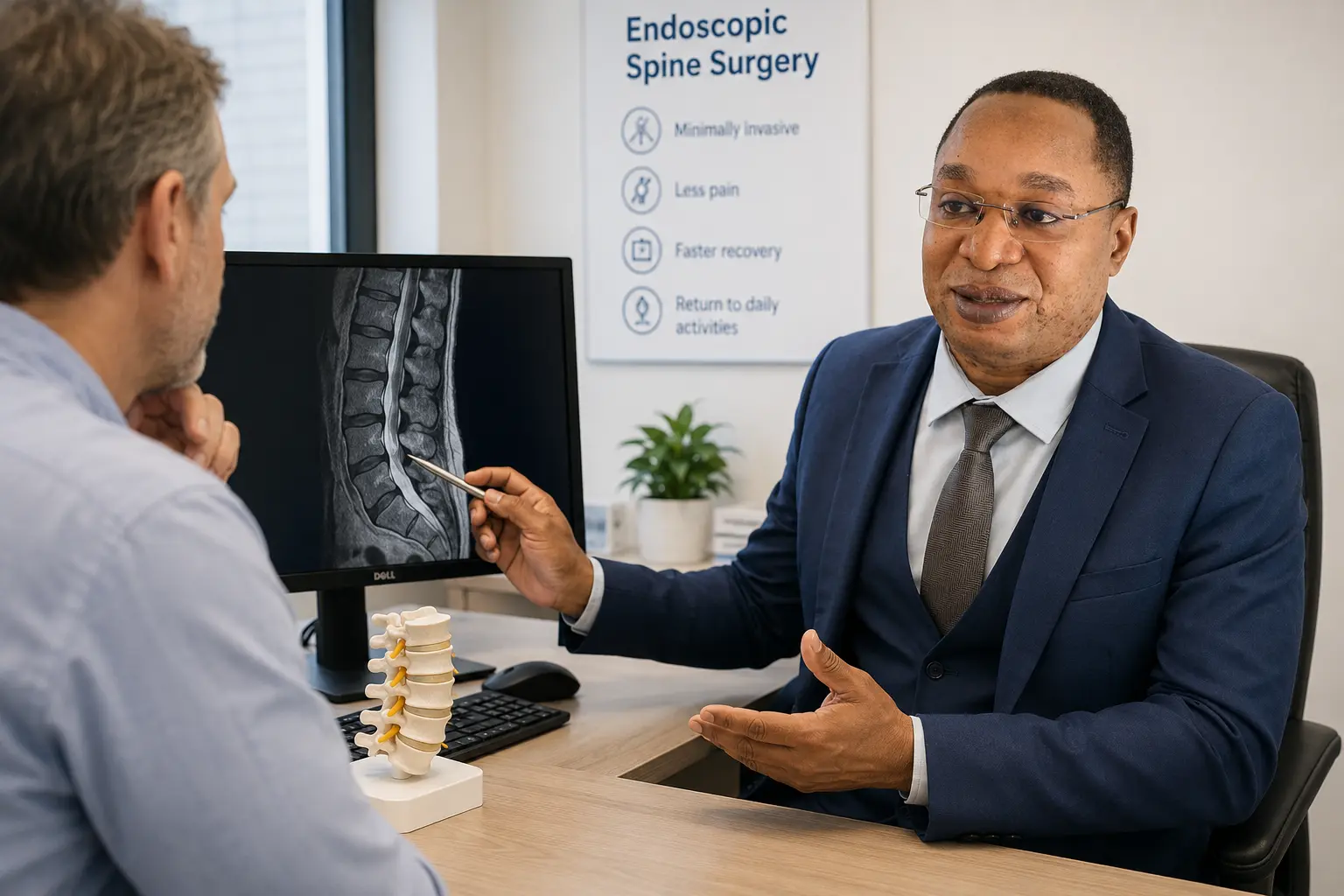
If you are considering treatment for a herniated disc or sciatica and would like expert advice, Mr. Desmond Sanusi offers specialist assessment and personalised treatment at Spine Focus in London.
For a complete overview of recovery after endoscopic surgery, visit our Endoscopic Spine Surgery Recovery Time Guide.
Frequently Asked Questions
Frequently Asked Questions
Is endoscopic spine surgery less painful than microdiscectomy?
Many patients report less post-operative pain due to reduced tissue disruption.
Which procedure has the faster recovery?
Endoscopic spine surgery generally offers a quicker recovery.
Can both procedures treat sciatica?
Yes. Both procedures are commonly used to relieve nerve compression causing sciatica.
Is the success rate similar?
Both procedures can achieve excellent outcomes when performed for appropriate indications.
Which surgery leaves a smaller scar?
Endoscopic spine surgery typically results in a smaller scar.