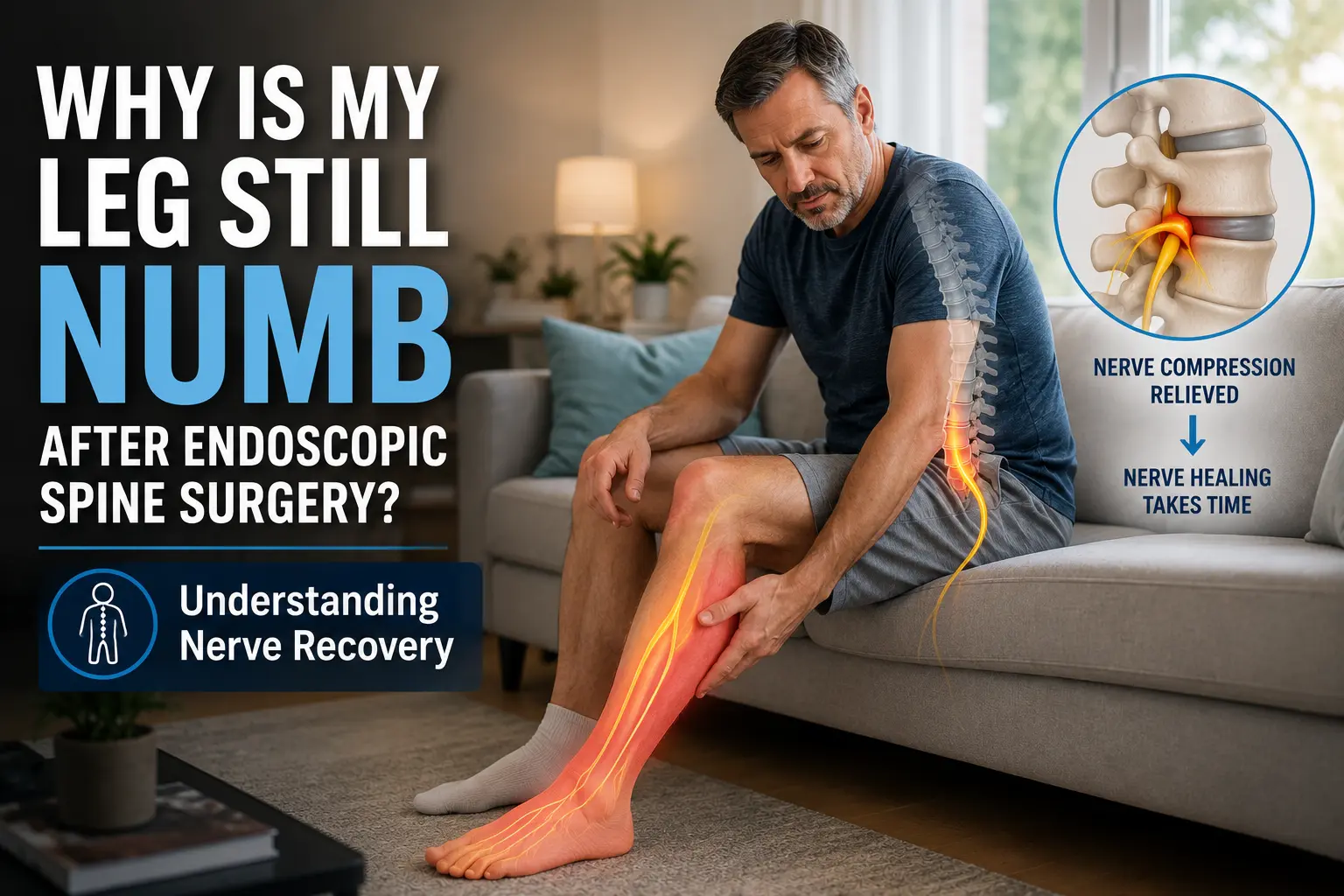
One of the most common concerns patients have after endoscopic spine surgery is waking up days, weeks, or even months later and realizing that part of their leg is still numb.
Many people expect numbness to disappear immediately after surgery, especially if their leg pain improved right away.
When numbness remains, it is natural to wonder:
- Did the surgery fail?
- Is the nerve permanently damaged?
- Shouldn’t the numbness be gone by now?
- How long does nerve healing actually take?
The good news is that persistent numbness after endoscopic spine surgery is often a normal part of recovery.
In many cases, the nerve needs time to heal after months or years of compression. While surgery removes the pressure on the nerve, healing itself cannot be rushed.
This guide explains why numbness happens, how long it may last, when it is considered normal, and when you should contact your surgeon.
For a complete recovery roadmap, read our Endoscopic Spine Surgery Recovery Time Guide.
Quick Answer: Is Numbness After Endoscopic Spine Surgery Normal?
Yes.
Many patients experience persistent numbness after surgery, even when the procedure has been successful.
This happens because nerves heal much more slowly than muscles, skin, or other tissues.
It is common for:
- Leg pain to improve first
- Strength to improve second
- Numbness to improve last
In some patients, numbness improves within a few weeks.
In others, recovery may continue for several months.
Why Does Numbness Happen in the First Place?
To understand why numbness can persist after surgery, it helps to understand what caused the numbness before surgery.
Conditions commonly treated with endoscopic spine surgery include:
- Herniated discs
- Sciatica
- Lumbar spinal stenosis
- Nerve root compression
In these conditions, nerves become compressed by surrounding structures.
Over time, pressure on the nerve can interfere with normal nerve function.
This may cause:
- Numbness
- Tingling
- Burning sensations
- Weakness
- Shooting pain
Surgery removes the source of compression, but it does not instantly repair the nerve itself.
Think of the Nerve Like a Bruised Electrical Cable
A useful way to understand nerve recovery is to imagine an electrical cable that has been squeezed for a long time.
Even after the pressure is removed, the cable may not immediately function perfectly.
The same principle applies to spinal nerves.
The longer the nerve was compressed before surgery, the longer recovery may take afterward.
This is one reason why some patients notice immediate improvement while others require several months.
How Long Does Numbness Last After Endoscopic Spine Surgery?
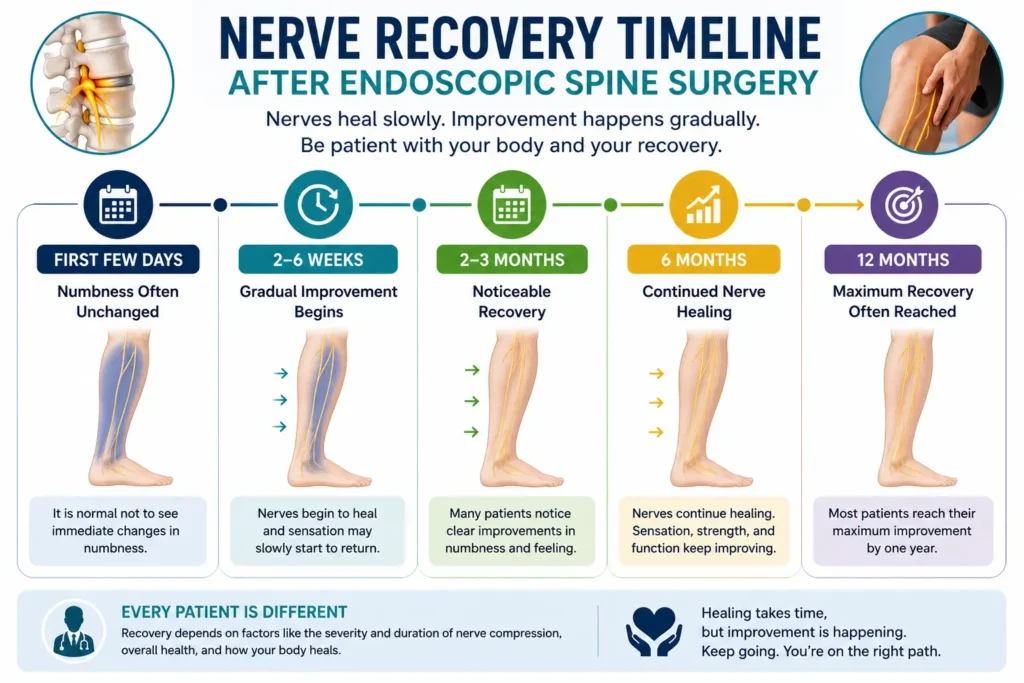
Every patient is different, but general timelines include:
| Time After Surgery | What Many Patients Experience |
|---|---|
| First few days | Numbness often unchanged |
| 2-6 weeks | Gradual improvement begins |
| 2-3 months | Noticeable recovery for many patients |
| 6 months | Continued nerve healing |
| 12 months | Maximum recovery often reached |
Patients who had severe nerve compression before surgery may require longer recovery periods.
Why Did My Pain Improve But My Numbness Didn’t?
This is extremely common.
Many patients experience dramatic relief from leg pain immediately after surgery.
However, numbness often improves much more slowly.
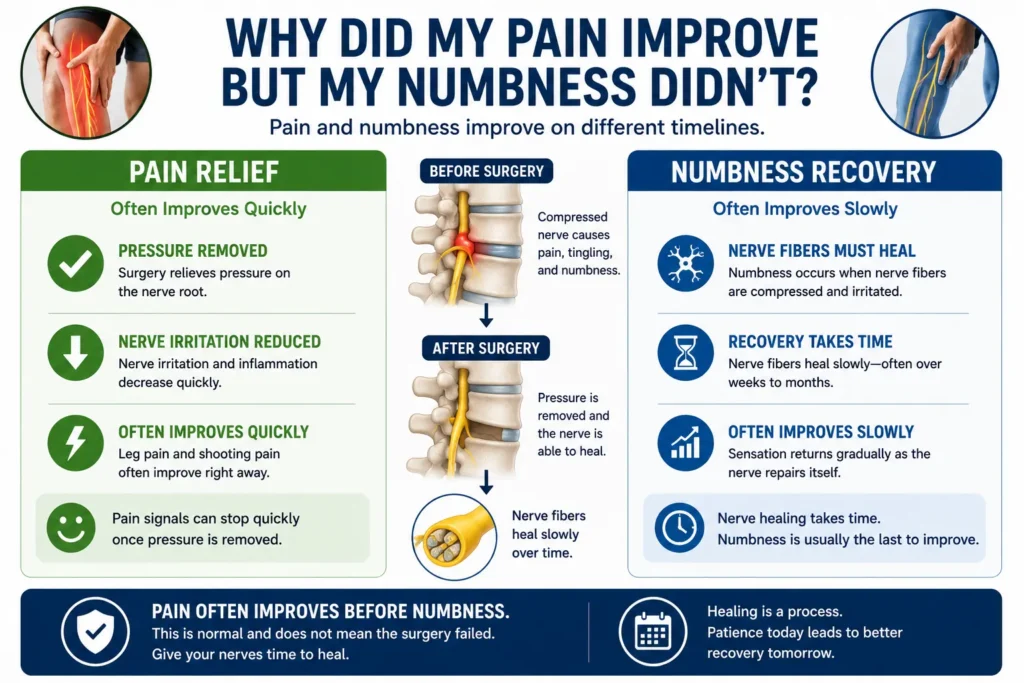
This happens because:
- Pain signals stop once pressure is removed
- Nerve healing takes time
- Damaged nerve fibers recover gradually
As a result, pain relief and numbness recovery often follow different timelines.
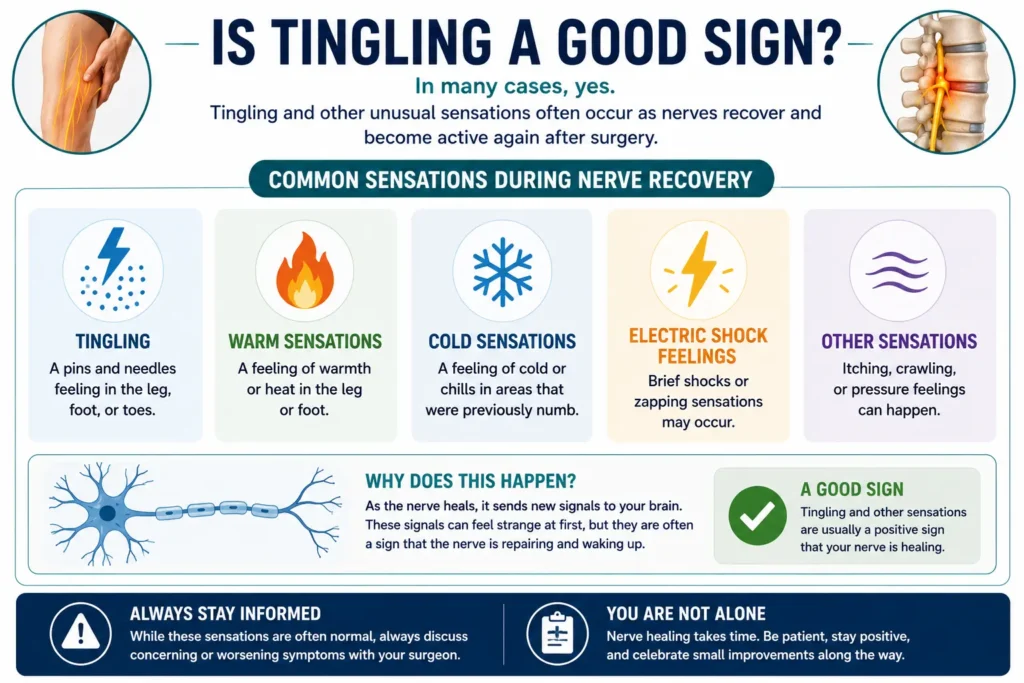
Is Tingling a Good Sign?
In many cases, yes.
During nerve recovery, patients often experience:
- Tingling
- Pins and needles
- Electric shock sensations
- Warm sensations
- Cold sensations
These symptoms can be alarming, but they often indicate that the nerve is recovering and becoming active again.
While uncomfortable, these sensations are frequently part of the healing process.
Factors That Influence Nerve Recovery
1. Duration of Compression
The longer a nerve was compressed before surgery, the longer recovery may take.
2. Severity of Compression
Severely compressed nerves often require more healing time.
3. Age
Younger patients may recover more quickly, although excellent outcomes occur at all ages.
4. Diabetes
Diabetes can affect nerve healing and may slow recovery.
5. Smoking
Smoking reduces blood flow and can impair tissue healing.
Signs Your Numbness Is Improving
Nerve recovery is often gradual.
Positive signs include:
- Smaller numb areas
- Improved sensation
- Less tingling
- Improved balance
- Improved strength
- Better walking ability
Progress may be slow, but even small improvements can indicate ongoing healing.
When Should You Be Concerned?
Although persistent numbness is often normal, some situations require medical review.
Contact your surgeon if you experience:
- New numbness after surgery
- Rapidly worsening numbness
- Increasing weakness
- Loss of bladder control
- Loss of bowel control
- Severe worsening pain
Prompt evaluation can help identify potential complications.
Can Numbness Become Permanent?
This is often the question patients fear most.
The answer depends on how much nerve damage existed before surgery.
Most patients experience improvement over time.
However, if a nerve was severely compressed for a prolonged period before treatment, some residual numbness may remain.
This is one reason why early assessment and treatment can be important.
Can Walking Help Nerve Recovery?
Walking is one of the best activities during recovery.
Benefits include:
- Improved circulation
- Better mobility
- Reduced stiffness
- Enhanced nerve health
Learn more in our guide:
Walking After Endoscopic Spine Surgery
Frequently Asked Questions
How long does numbness last after endoscopic spine surgery?
It varies. Many patients improve within weeks, while others continue recovering for months.
Is tingling a sign of healing?
Often yes. Tingling can occur as nerves recover.
Why is my foot still numb after surgery?
Foot numbness is often related to nerve root recovery and may improve gradually over time.
Can numbness return after initially improving?
Temporary fluctuations can occur during healing.
Will physiotherapy help?
Some patients benefit from rehabilitation programs designed to improve mobility and function.
Final Thoughts
If your leg is still numb after endoscopic spine surgery, try not to panic.
Persistent numbness is one of the most common concerns during recovery and does not automatically mean that something is wrong.
In many cases, surgery successfully removes pressure from the nerve, but the nerve itself simply needs time to heal.
Recovery often occurs gradually over weeks and months, with numbness usually improving more slowly than pain.
Continue following your recovery plan, remain active within recommended limits, and attend all follow-up appointments with your surgeon.
For a complete overview of what to expect after surgery, read our Endoscopic Spine Surgery Recovery Time: Week-by-Week Recovery Guide.