After endoscopic spine surgery, many patients are surprised to discover that one of the biggest challenges is not walking, driving, or returning to work—it’s getting comfortable enough to sleep.
Even when surgery has successfully relieved leg pain or nerve compression, the healing process can leave patients dealing with temporary stiffness, soreness, and difficulty finding a comfortable sleeping position.
Many patients ask:
- What is the best sleeping position after spine surgery?
- Can I sleep on my side?
- Can I sleep on my stomach?
- Should I sleep on my back?
- Why is it difficult to get comfortable at night?
The good news is that there are several simple strategies that can improve comfort, protect your spine, and help you sleep better during recovery.
In this guide, we explain the best sleeping positions after endoscopic spine surgery, which positions to avoid, and how to make nighttime recovery more comfortable.
For a complete recovery timeline, read our Endoscopic Spine Surgery Recovery Time Guide.
Quick Answer: What Is the Best Sleeping Position After Spine Surgery?
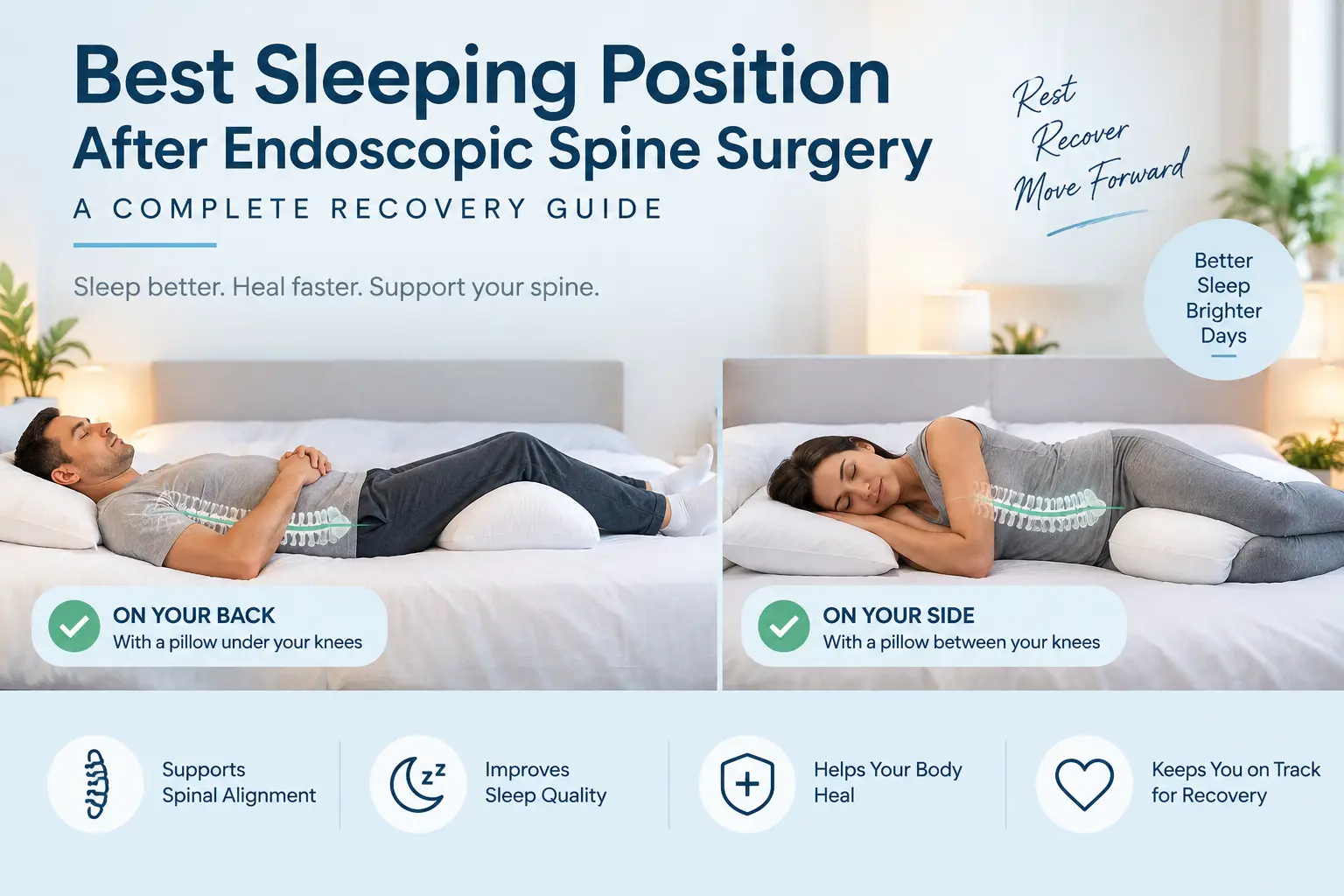
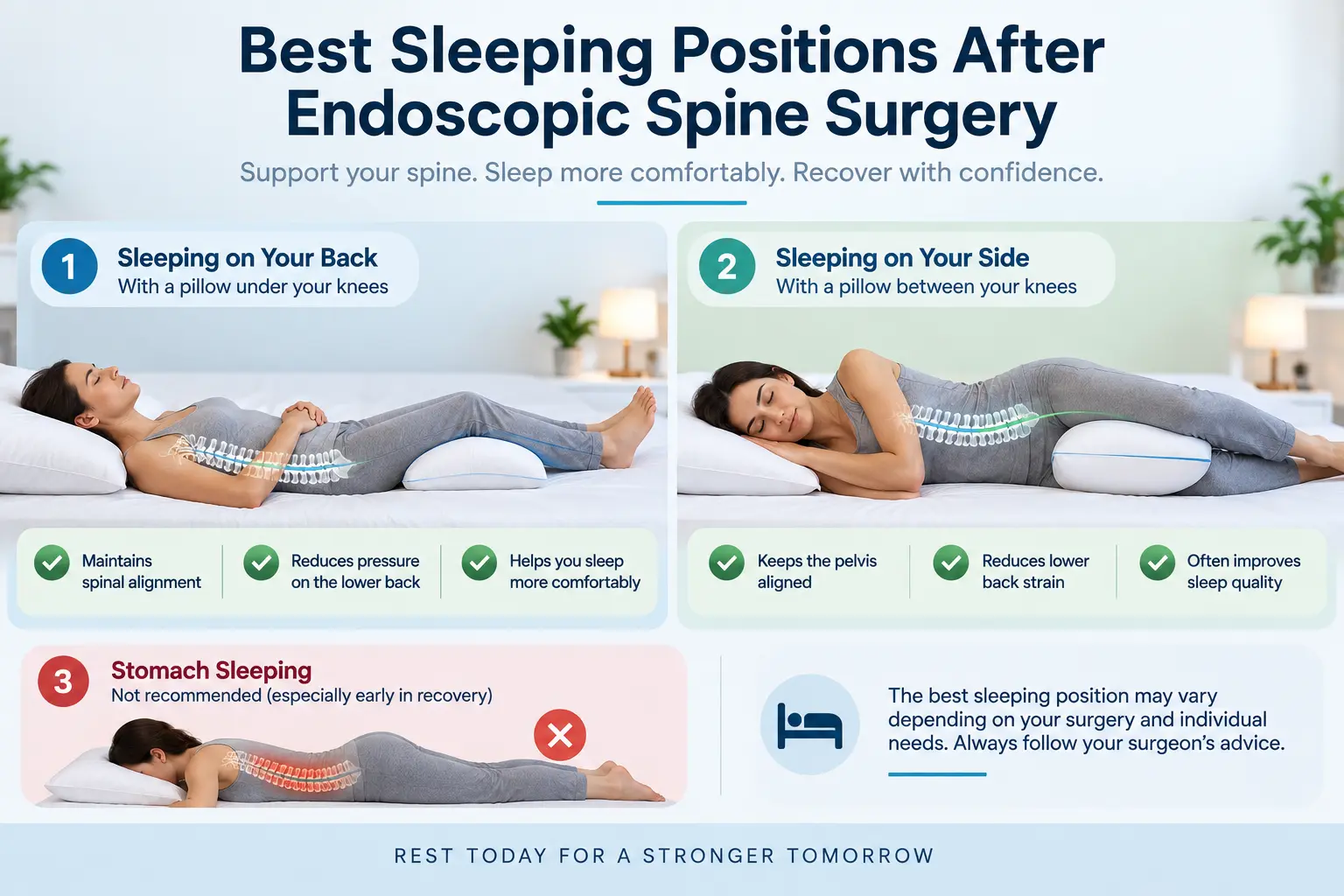
For many patients, the most comfortable sleeping positions after endoscopic spine surgery are sleeping on the back with a pillow under the knees or sleeping on the side with a pillow between the knees.
Your surgeon’s instructions should take priority, particularly if you had a specific procedure or have additional restrictions.
- Sleeping on your back with a pillow under your knees
- Sleeping on your side with a pillow between your knees
These positions help maintain a neutral spine position and reduce unnecessary stress on the lower back.
The ideal position may vary depending on the type of surgery performed and your individual comfort level.
Why Sleep Matters During Recovery
Sleep plays a critical role in the healing process.
During sleep, your body:
- Repairs tissues
- Reduces inflammation
- Supports immune function
- Restores energy levels
- Promotes nerve recovery
Poor sleep can increase:
- Pain sensitivity
- Fatigue
- Stress
- Recovery time
This is why finding a comfortable sleeping position is more important than many patients realize.
Why Sleeping Can Feel Difficult After Surgery
Even though endoscopic spine surgery is less invasive than traditional open surgery, some discomfort during recovery is completely normal.
Common reasons sleep may be affected include:
- Incision soreness
- Muscle tightness
- Back stiffness
- Nerve irritation
- Changes in sleeping habits
These symptoms often improve as healing progresses, although the recovery experience varies between patients and procedures.
Sleeping on Your Back: Often the Best Choice
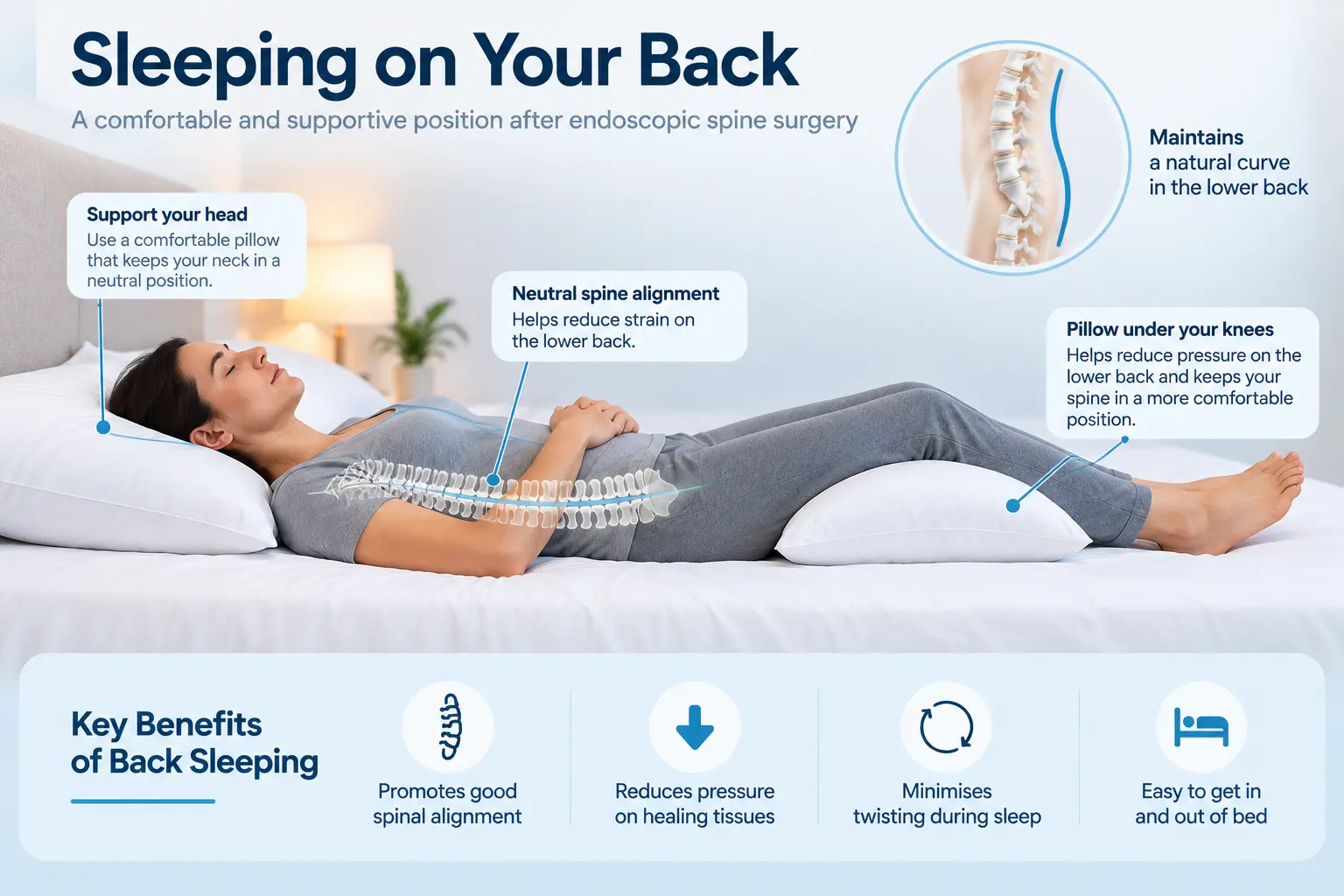
For many patients, sleeping on the back is the most comfortable position after surgery.
This position allows the spine to remain relatively neutral and evenly distributes body weight.
How to Sleep on Your Back Properly
Place a pillow beneath your knees.
This helps:
- Reduce pressure on the lower back
- Maintain spinal alignment
- Improve comfort
Some patients also find that a small pillow under the lower legs provides additional support.
Benefits of Back Sleeping
- Good spinal alignment
- Reduced pressure on healing tissues
- Less twisting during sleep
- Easy transition in and out of bed
Sleeping on Your Side
Many patients naturally prefer sleeping on their side.
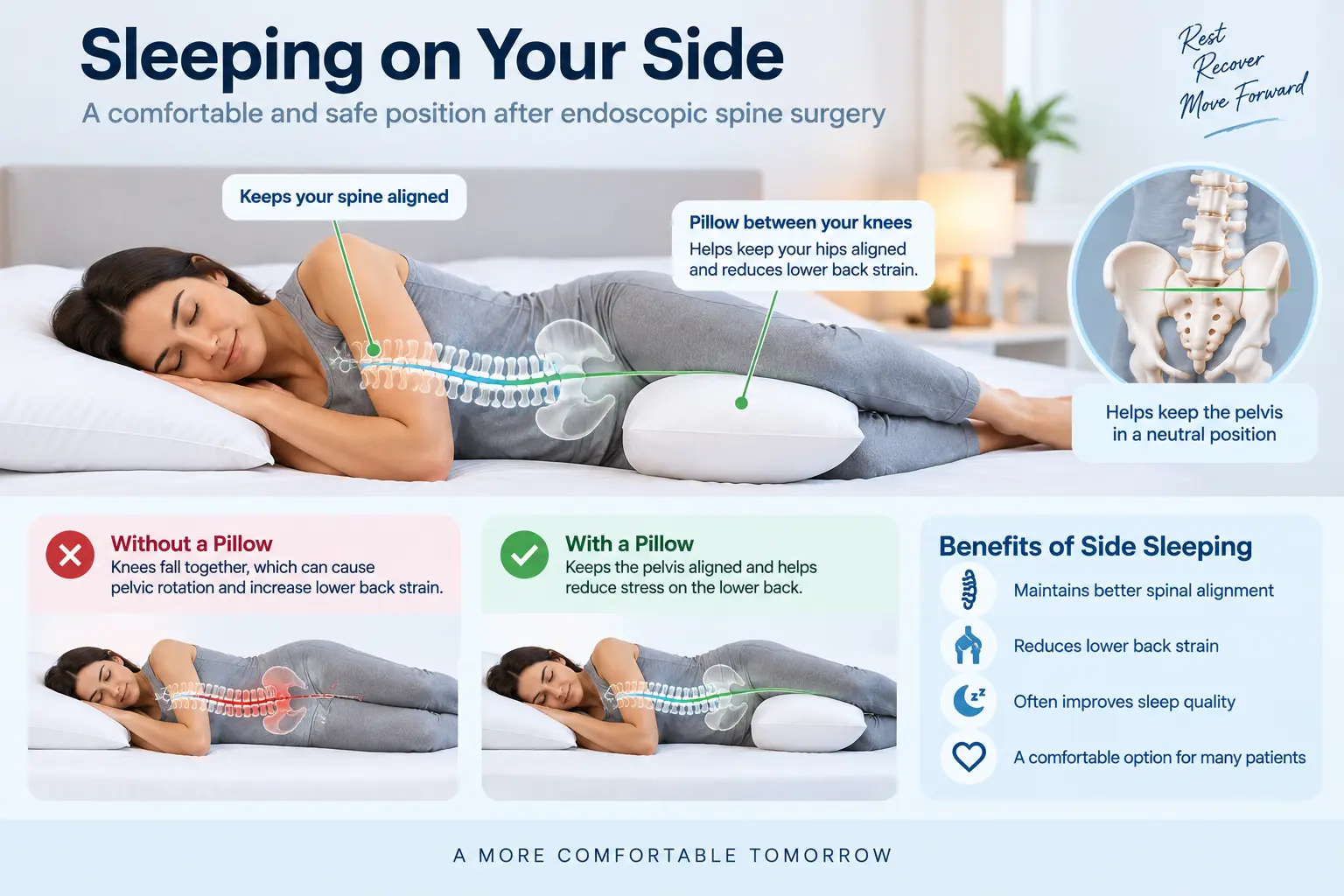
In most cases, side sleeping is perfectly acceptable after endoscopic spine surgery.
How to Sleep on Your Side Safely
Place a pillow between your knees.
This simple adjustment helps:
- Keep the pelvis aligned
- Reduce lower back strain
- Improve overall comfort
Benefits of Side Sleeping
- Comfortable for many patients
- Reduced spinal rotation
- May reduce lower back stress
- Often improves sleep quality
Can You Sleep on Your Stomach?
Stomach sleeping may be uncomfortable for many patients during the early recovery period because it can increase arching or rotation through the spine. Unless your surgeon specifically advises otherwise, back or side sleeping may be more comfortable while you are recovering.
Sleeping on the stomach often forces the neck and lower back into awkward positions.
This may increase:
- Back strain
- Neck discomfort
- Muscle tension
- Post-operative soreness
If you normally sleep on your stomach, consider transitioning temporarily to side or back sleeping while healing occurs.
How to Get In and Out of Bed Safely
Getting into bed is often more uncomfortable than lying in bed.
The safest technique is known as the “log roll” method.
How to Perform a Log Roll
- Roll onto your side.
- Keep your shoulders and hips aligned.
- Lower yourself slowly.
- Use your arms for support.
- Avoid twisting your spine.
This technique minimizes unnecessary strain on healing tissues.
What If I Wake Up With Back Pain?
Some morning stiffness is common after spine surgery.
This does not necessarily indicate a problem.
You may notice:
- Mild stiffness
- Tight muscles
- Temporary soreness
- Reduced flexibility
These symptoms often improve after getting up and moving around.
Gentle walking, when recommended by your surgical team, can help reduce stiffness and gradually restore mobility after surgery.
Learn more in:
Walking After Endoscopic Spine Surgery
Can Numbness Affect Sleep?
Yes.
Patients recovering from nerve compression sometimes experience:
- Numbness
- Tingling
- Burning sensations
- Electric-shock feelings
These symptoms can occasionally become more noticeable at night when distractions are reduced.
Read more in:
Why Is My Leg Still Numb After Endoscopic Spine Surgery?
How to Create a More Comfortable Sleep Environment
Choose a Supportive Mattress
A mattress that is too soft or excessively worn may worsen discomfort.
Use Extra Pillows
Pillows can help support the spine and improve alignment.
Maintain a Comfortable Temperature
A cool, comfortable bedroom often improves sleep quality.
Follow a Consistent Sleep Schedule
Regular sleep routines help support recovery and overall wellbeing.
Common Sleeping Mistakes After Spine Surgery
Sleeping on the Stomach Too Soon
This can increase strain on the spine.
Twisting While Getting Out of Bed
Use the log-roll technique whenever possible.
Using Unsupportive Pillows
Poor support may worsen discomfort.
Remaining in One Position Too Long
Gentle position changes can improve comfort.
When Should You Contact Your Surgeon?
Contact your surgical team if you develop new or worsening symptoms such as:
- Increasing or severe pain that is not improving
- New or worsening weakness in the leg
- New loss of bladder or bowel control
- Increasing numbness, particularly around the groin or inner thighs
- Fever or chills
- Increasing redness, swelling, drainage, or other changes around the incision
- Severe symptoms that are getting worse rather than gradually improving
Final Thoughts
Finding the best sleeping position after endoscopic spine surgery can make a significant difference to your comfort and recovery.
For most patients, sleeping on the back with a pillow under the knees or sleeping on the side with a pillow between the knees provides the best support.
Remember that some temporary discomfort is normal, especially during the first few weeks. Focus on protecting your spine, maintaining good alignment, and allowing your body the rest it needs to heal.
For a complete week-by-week recovery plan, read our Endoscopic Spine Surgery Recovery Time Guide.
Frequently Asked Questions
Can I sleep on my side after endoscopic spine surgery?
Yes. Many patients find side sleeping comfortable when a pillow is placed between the knees.
Is sleeping on my back better?
For many patients, sleeping on the back with a pillow under the knees provides excellent spinal support.
When can I sleep normally again?
Most patients notice significant improvements within several weeks of surgery.
Why does my back feel stiff in the morning?
Morning stiffness is common during recovery and often improves with gentle movement.
Can I sleep without pillows?
Most patients benefit from strategically placed pillows that improve spinal alignment.