
One of the biggest surprises for many patients after endoscopic spine surgery is being encouraged to get out of bed and walk shortly after the procedure.
For years, many people believed that back surgery required extended bed rest. However, modern spine surgery recovery has changed significantly. In fact, walking is often one of the first activities recommended after endoscopic spine surgery because it helps promote healing and reduces the risk of complications.
If you have recently undergone surgery or are preparing for an upcoming procedure, you may be wondering:
- Can I walk immediately after endoscopic spine surgery?
- How much walking is safe?
- Can walking damage the surgical area?
- What if walking increases my pain?
- How many steps should I take each day?
The good news is that most patients can safely begin walking within hours after surgery. However, knowing how much to walk and how quickly to increase your activity is essential for a smooth recovery.
In this guide, we explain everything you need to know about walking after endoscopic spine surgery, including recovery timelines, common mistakes, and warning signs to watch for.
For a complete recovery roadmap, see our Endoscopic Spine Surgery Recovery Time: Week-by-Week Recovery Guide.
Quick Answer: Can You Walk Immediately After Endoscopic Spine Surgery?
Yes. Most patients are encouraged to walk within a few hours after endoscopic spine surgery.
Walking is one of the safest and most effective activities during the early recovery period because it:
- Improves blood circulation
- Reduces stiffness
- Helps prevent blood clots
- Maintains muscle activity
- Supports faster recovery
- Improves confidence and mobility
While walking is encouraged, it is important to start slowly and increase activity gradually over time.
Why Walking Is So Important After Endoscopic Spine Surgery
Walking plays a critical role in the recovery process.
Unlike high-impact exercises that place significant stress on the spine, walking provides gentle movement without excessive strain.
Improves Blood Flow
After surgery, your body needs increased circulation to deliver oxygen and nutrients to healing tissues. Walking stimulates blood flow and supports the natural healing process.
Reduces Stiffness
Remaining in one position for too long can cause muscles and joints to become stiff. Walking helps maintain flexibility and mobility.
Helps Prevent Blood Clots
One of the reasons surgeons encourage early movement is to reduce the risk of deep vein thrombosis (DVT), a condition where blood clots form in the legs.
Supports Mental Recovery
Walking can improve confidence and reduce anxiety. Many patients feel reassured when they realize they can move comfortably after surgery.
What Happens on the Day of Surgery?
Most endoscopic spine surgery procedures are performed as day-case or short-stay procedures.
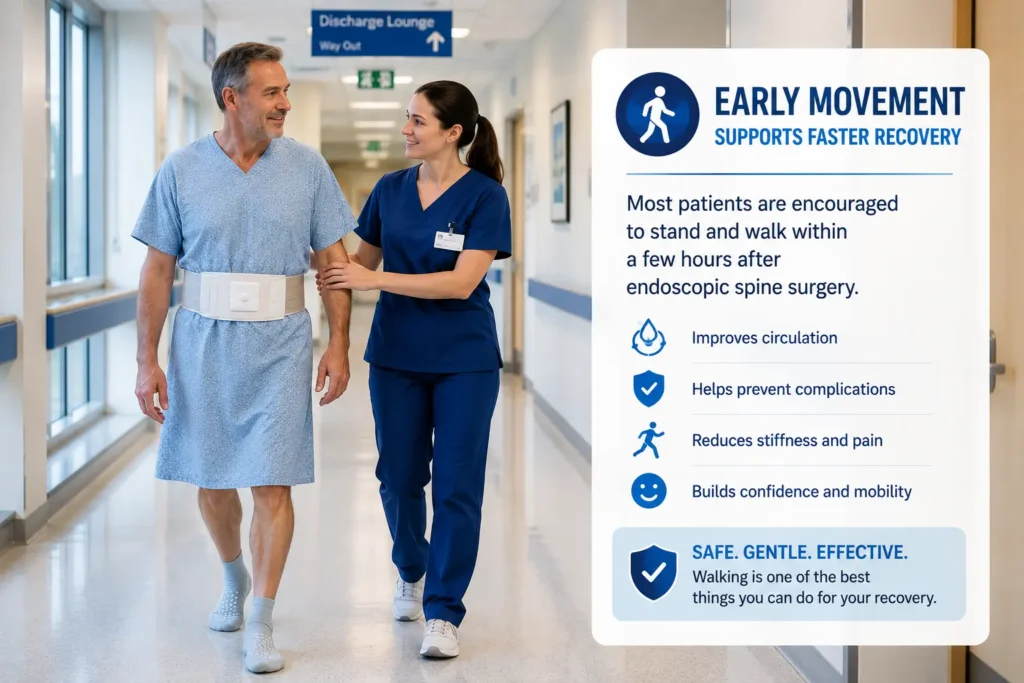
Once the effects of anesthesia begin to wear off, healthcare staff may help you stand and walk.
Many patients can:
- Stand within a few hours
- Walk short distances
- Use the bathroom independently
- Return home the same day
Do not be surprised if your surgeon encourages movement much earlier than you expected.
This is now considered a normal part of modern spine surgery recovery.
How Much Walking Should You Do During Week One?
The first week after surgery is focused on healing and gentle movement.
Your goal is not fitness or exercise. Your goal is mobility.
Recommended Approach
Instead of taking one long walk, take several short walks throughout the day.
For example:
- 5-10 minutes in the morning
- 5-10 minutes at lunchtime
- 5-10 minutes in the afternoon
- 5-10 minutes in the evening
Short, frequent walks are usually better tolerated than one long session.
Listen to Your Body
Mild discomfort is normal.
However, severe pain is not.
If symptoms increase significantly, slow down and discuss your concerns with your surgeon.
Walking Recovery Timeline: Week by Week
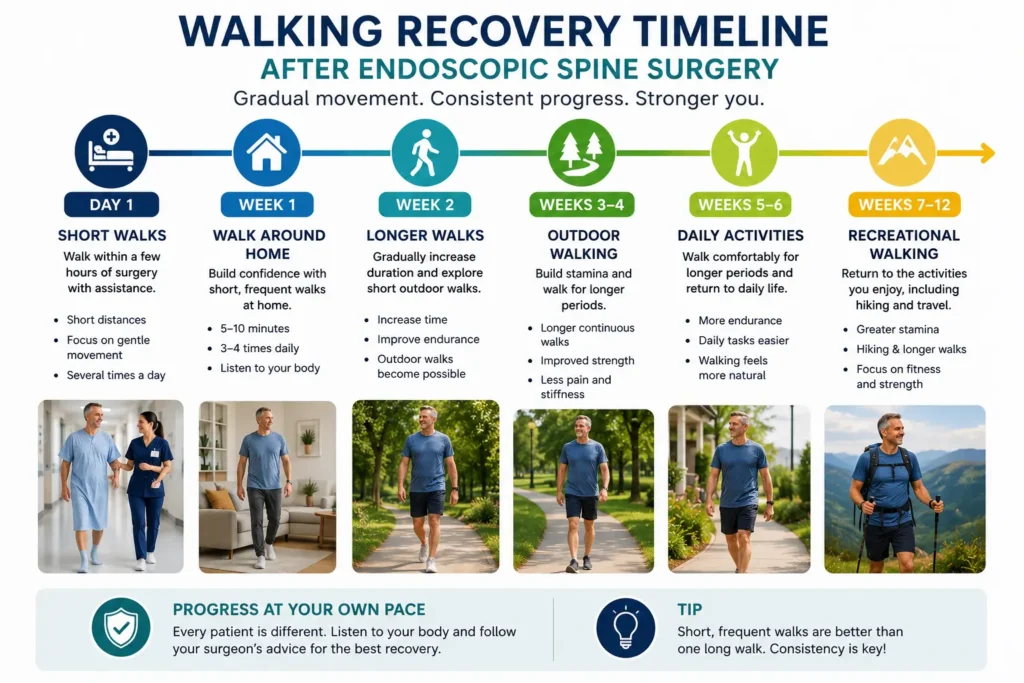
Week 1
- Multiple short walks daily
- Gentle movement around the home
- Focus on comfort rather than distance
Week 2
- Walking duration gradually increases
- Improved confidence
- Longer outdoor walks become possible
Weeks 3-4
- Significant improvements in endurance
- Reduced pain levels
- Longer continuous walks
Weeks 5-6
- Most patients walk comfortably for extended periods
- Daily activities become easier
- Walking begins to feel normal again
Weeks 7-12
- Walking tolerance continues to improve
- Many patients resume recreational walking and hiking
- Focus shifts toward fitness and strengthening
What If Walking Causes Pain?
This is one of the most common questions patients ask.
Some discomfort during recovery is normal.
You may experience:
- Mild soreness
- Muscle tightness
- Temporary stiffness
- Fatigue
These symptoms usually improve as healing progresses.
When Pain Is Usually Normal
- Mild soreness after walking
- Temporary stiffness
- Symptoms that improve with rest
When Pain May Need Medical Review
- Severe worsening pain
- Increasing weakness
- New numbness
- Loss of bladder or bowel control
- Symptoms that progressively worsen
If you experience any concerning symptoms, contact your surgeon promptly.
Can Walking Damage the Surgical Site?
This is another common concern.
When performed appropriately, walking is unlikely to damage the surgical area.
In fact, walking is one of the safest activities during recovery.
Problems are more likely to occur when patients:
- Lift heavy objects
- Twist excessively
- Perform high-impact exercise too early
- Ignore post-operative instructions
Walking within recommended limits is generally beneficial rather than harmful.
How Many Steps Should I Walk After Endoscopic Spine Surgery?
There is no universal step count that applies to every patient.
The focus should be on gradual progression rather than reaching a specific number.
A typical progression may look like:
| Recovery Stage | Walking Goal |
|---|---|
| Week 1 | Short frequent walks |
| Week 2 | Increase duration gradually |
| Weeks 3-4 | Longer continuous walks |
| Weeks 5-8 | Build endurance steadily |
| After 8 Weeks | Return toward normal activity levels |
Quality of movement is more important than hitting an arbitrary step target.
Common Walking Mistakes After Spine Surgery

1. Doing Too Much Too Soon
Feeling good does not mean healing is complete.
2. Staying in Bed All Day
Excessive inactivity can slow recovery and increase stiffness.
3. Ignoring Fatigue
Fatigue is common during recovery and should be respected.
4. Poor Walking Posture
Maintain an upright posture and avoid slouching.
5. Comparing Yourself to Other Patients
Every recovery is different. Focus on your own progress.
Signs Your Walking Recovery Is Going Well
Positive signs include:
- Increasing walking distance
- Reduced pain
- Improved endurance
- Better posture
- Greater confidence with movement
- Improved quality of life
Recovery rarely progresses perfectly every day. Focus on overall improvement rather than temporary setbacks.
Frequently Asked Questions
Can I walk immediately after endoscopic spine surgery?
Most patients are encouraged to walk within hours of surgery.
How long should I walk each day?
Start with several short walks and gradually increase duration based on comfort.
Can walking make my condition worse?
Walking is generally considered one of the safest activities during recovery when performed appropriately.
Can I walk up stairs?
Many patients can safely use stairs within the first few days, depending on comfort and balance.
Should I use a walking aid?
Some patients benefit from temporary support devices, but many can walk independently soon after surgery.
What if my leg hurts while walking?
Mild discomfort can be normal. Persistent or worsening symptoms should be discussed with your surgeon.
Final Thoughts
Walking is one of the most important parts of recovery after endoscopic spine surgery. Far from being harmful, early movement helps improve circulation, reduce stiffness, and support healing.
The key is to start slowly, increase activity gradually, and listen to your body. Most patients can safely begin walking within hours of surgery and steadily build their endurance over the following weeks.
If you are recovering from endoscopic spine surgery, remember that every patient’s journey is unique. Focus on consistent progress, follow your surgeon’s recommendations, and celebrate each milestone along the way.
For a complete recovery timeline, read our Endoscopic Spine Surgery Recovery Time: Week-by-Week Recovery Guide.