Endoscopic techniques
Endoscopic spine surgery is an advanced minimally invasive surgical technique used to treat a range of spinal conditions through very small incisions using specialised cameras and surgical instruments. These modern techniques allow surgeons to access spinal structures with reduced disruption to surrounding muscles, tissues, and nerves compared with traditional open spinal surgery.
Endoscopic spinal surgery may be used to treat conditions such as disc herniation, nerve compression, spinal stenosis, sciatica, and selected degenerative spinal disorders. In carefully selected patients, endoscopic procedures may offer faster recovery, reduced postoperative pain, shorter hospital stays, and quicker return to daily activities.
At Spine Focus UK, Mr. Taofiq Desmond Sanusi provides specialist assessment and advanced minimally invasive spinal treatment using modern endoscopic surgical techniques where clinically appropriate.
Every patient undergoes comprehensive spinal evaluation and imaging assessment to determine whether endoscopic surgery is suitable based on the location of pathology, symptom severity, neurological findings, and overall spinal stability.
Modern endoscopic techniques continue to expand treatment possibilities for patients requiring precise and less invasive spinal surgery.
Understanding Endoscopic Spine Surgery
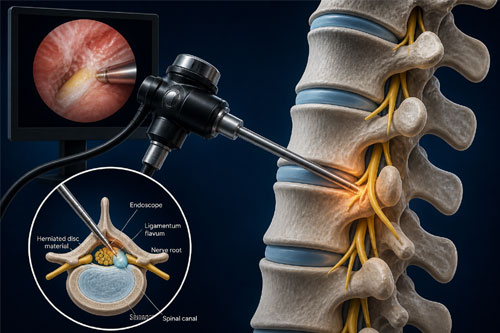
Endoscopic spine surgery is a highly specialised form of minimally invasive spinal surgery that uses a thin camera system called an endoscope to visualise spinal structures through very small incisions.
The endoscope provides high-definition visualisation of nerves, discs, ligaments, and surrounding spinal anatomy while minimising disruption to muscles and soft tissues. Specialised instruments are then used to remove compressed disc material, relieve nerve pressure, or treat spinal pathology.
Compared with traditional open spinal surgery, endoscopic techniques aim to reduce tissue trauma while maintaining precise surgical treatment of the underlying spinal condition.
At Spine Focus UK, endoscopic spinal techniques form part of a broader specialist spinal care approach focused on evidence-based treatment, patient safety, and optimising recovery outcomes.
What Conditions Can Be Treated With Endoscopic Spine Surgery?
Endoscopic spinal surgery may be appropriate for selected patients with specific spinal conditions.
Common conditions treated using endoscopic techniques include:
- Lumbar disc prolapse
- Sciatica
- Nerve root compression
- Lumbar spinal stenosis
- Cervical disc herniation in selected cases
- Foraminal stenosis
- Recurrent disc prolapse
- Degenerative spinal disease
- Selected thoracic spinal conditions
Not all spinal conditions are suitable for endoscopic surgery, and careful specialist assessment is essential to determine the safest and most effective treatment approach.
How Endoscopic Spine Surgery Works
During endoscopic spine surgery, a very small incision is made near the affected area of the spine. A specialised camera system is inserted to allow detailed visualisation of the spinal structures.
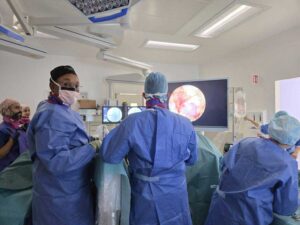
Using advanced surgical instruments, the surgeon can precisely treat the underlying spinal pathology while minimising disruption to surrounding tissues.
Depending on the condition being treated, surgery may involve:
- Removal of disc material compressing a nerve
- Decompression of spinal stenosis
- Relief of nerve root compression
- Treatment of foraminal narrowing
- Removal of selected pathological tissue
Many procedures can be performed using smaller incisions than traditional open surgery techniques.
Benefits of Endoscopic Spine Surgery
Modern endoscopic techniques may offer several advantages in carefully selected patients.
Potential benefits include:
- Smaller incisions
- Reduced muscle disruption
- Less blood loss
- Reduced postoperative pain
- Shorter hospital stay
- Faster recovery
- Earlier return to normal activities
- Reduced tissue trauma
- Lower infection risk in selected cases
Because less soft tissue disruption occurs, some patients may experience improved early postoperative mobility and rehabilitation.
Who May Benefit From Endoscopic Spine Surgery?
Patients with localised nerve compression or disc-related spinal pathology may benefit from endoscopic treatment if symptoms persist despite conservative management.
Endoscopic surgery may be considered for patients experiencing:
- Sciatica
- Persistent leg pain
- Nerve compression symptoms
- Numbness or tingling
- Weakness caused by disc prolapse
- Spinal stenosis symptoms
- Persistent symptoms despite physiotherapy and injections
Specialist imaging and clinical assessment are essential to determine whether the pathology can be safely and effectively treated using endoscopic techniques.
When Is Traditional Surgery Still Necessary?
Although endoscopic surgery offers significant advantages in selected cases, some complex spinal conditions still require traditional or more extensive surgical approaches.
Conditions that may require alternative techniques include:
- Complex spinal instability
- Major spinal deformity
- Multi-level compression
- Severe spinal cord compression
- Complex revision surgery
- Certain spinal tumours
- Advanced deformity reconstruction
Treatment planning is highly individualised and based on the patient’s symptoms, imaging findings, neurological status, and long-term treatment goals.
Recovery After Endoscopic Spine Surgery
Recovery varies depending on the specific spinal condition and procedure performed.
Many patients experience:
- Early mobilisation
- Reduced postoperative discomfort
- Shorter hospital stays
- Gradual improvement in nerve symptoms
- Faster return to daily activities
Postoperative rehabilitation may include physiotherapy, guided exercises, activity modification, and follow-up spinal assessment.
Recovery timelines vary between individuals and depend on factors such as nerve compression severity, duration of symptoms, and overall spinal health.
The Importance of Specialist Endoscopic Spinal Assessment
Endoscopic spine surgery is highly specialised and requires advanced training, detailed anatomical understanding, and careful patient selection.
Comprehensive assessment helps determine:
- Whether endoscopic surgery is appropriate
- The safest surgical approach
- The exact location of nerve compression
- The degree of spinal instability
- Expected outcomes and recovery
Careful planning is essential to achieve the safest and most effective results.
Advanced Endoscopic Spine Surgery at Spine Focus UK
Spine Focus UK provides specialist assessment and advanced minimally invasive spinal treatment using modern endoscopic surgical techniques.
Mr. Taofiq Desmond Sanusi is a Consultant Neurosurgeon and Complex Spine Surgeon with advanced fellowship training in endoscopic spinal surgery, minimally invasive spinal techniques, robotic spinal surgery, and complex spinal pathology.
Patients receive comprehensive, evidence-based care using advanced imaging, modern surgical technology, and personalised treatment planning designed to improve pain, mobility, neurological function, and overall quality of life.
Frequently Asked Questions
Common questions about Endoscopic techniques, symptoms, diagnosis, treatment options, and recovery.
What is endoscopic spine surgery?
Endoscopic spine surgery is a minimally invasive spinal procedure performed using specialised cameras and surgical instruments through very small incisions.
What conditions can be treated with endoscopic spine surgery?
Conditions may include disc prolapse, sciatica, spinal stenosis, nerve compression, foraminal stenosis, and selected degenerative spinal disorders.
What are the benefits of endoscopic spinal surgery?
Potential benefits include smaller incisions, reduced muscle disruption, less pain, shorter hospital stays, reduced blood loss, and faster recovery.
Is endoscopic spine surgery less invasive than traditional surgery?
Yes. Endoscopic techniques generally involve smaller incisions and reduced soft tissue disruption compared with traditional open spinal surgery.
Who is suitable for endoscopic spinal surgery?
Suitability depends on the specific spinal condition, imaging findings, symptom severity, and overall spinal stability.
Can endoscopic surgery treat sciatica?
Yes. Endoscopic techniques may be used to treat sciatica caused by nerve compression or disc prolapse in selected patients.
How long does recovery take after endoscopic spine surgery?
Recovery varies between individuals, but many patients experience earlier mobilisation and faster return to daily activities compared with traditional surgery.
Does endoscopic spine surgery require a hospital stay?
Some patients may require only a short hospital stay depending on the procedure performed and their overall recovery.
Are all spinal conditions suitable for endoscopic surgery?
No. Some complex spinal conditions may still require traditional open surgery or reconstructive spinal procedures.
Why is specialist assessment important before endoscopic surgery?
Careful assessment ensures that the spinal condition can be safely and effectively treated using endoscopic techniques and helps determine the most appropriate treatment approach.
Need Specialist Advice?
Spine Focus UK provides specialist assessment and advanced treatment for complex spinal and neurosurgical conditions.
Book a Consultation